I'm not sure if it was the smartest idea to stand on the roof of a pilgrim centre in gale-force winds. Maybe my weight worked in my favour, by keeping me from being blown away. I even managed to have a full conversation up there with Laila about coastal pilgrimages. She's the woman in the second video, the one running up to the roof. I was watching a theatre rehearsal from above, and Laila, who's also in the play, had heard I was looking for her. So we ended up having an interesting conversation, with the wind dominating the dialogue. But that’s quite fitting for a route along Norway’s west coast: the weather always has the first - and the final - word.
“With a bit of luck, you’ll be able to cycle again in a week,” the doctor at the hospital had said. That he had also mentioned it could take much longer, I had conveniently ‘forgotten’. After all, I was feeling a lot better every day, wasn’t I? Sure, I was still a little tired after a week, but getting out on my bike would do me good. That’s what my own GP had said the last time I was recovering from bronchitis: “Just get outside and cycle as much as you like.”
The plan was to cycle for four days and then take a rest day. In reality, it turned into two days of cycling and three days of rest. After the second day, I had to admit I wasn’t fully recovered at all. The coughing came back, along with extreme fatigue. A friend explained that that’s typical of prednisone: the cough disappears within a few days, and you start to feel better, but in reality, your body is still sick and nowhere near done healing.
During those two days, I did manage to visit two key sites. The Coastal Pilgrimage Route in Norway includes 25 so-called "key places": important locations in Norwegian history that pilgrims can visit. I still haven’t seen them all, but I hope to make good progress this summer.
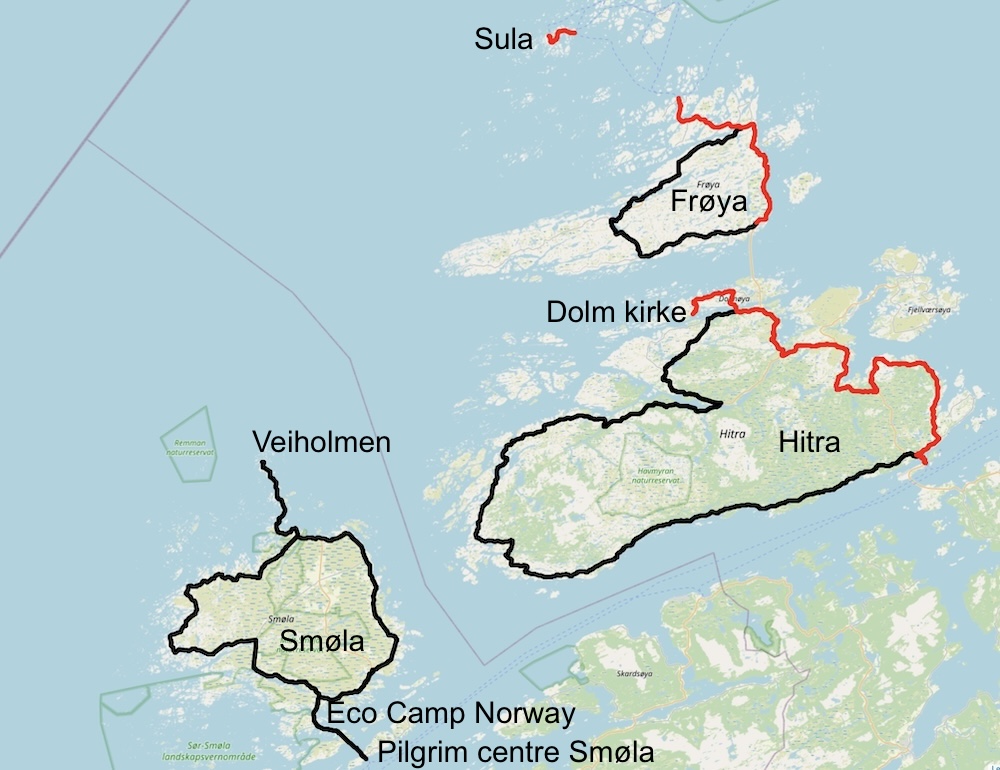
The key places I visited this time are located on two small islands. See the map: the red line marks the cycling route to the key sites. The black lines across the islands represent additional cycling routes that will be included in the guidebook later. I wasn’t able to cycle those extra routes across Hitra and Frøya this time. I followed the red route as far as Sula, then returned to Smøla, where my car was parked, by ferry, bus, and another ferry.
Click or tap to enlarge:

Hitra
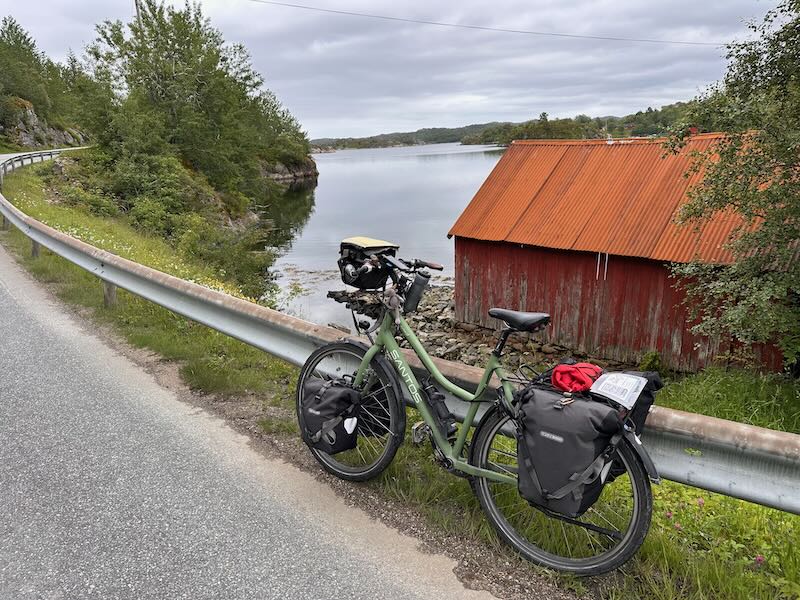
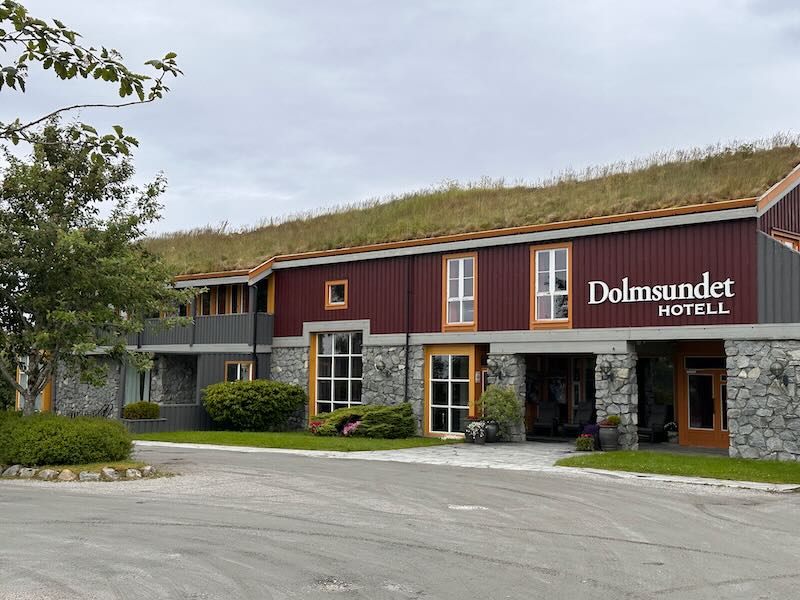
I’m not sure what impressed me more: the five deer I saw on the road that evening, or the stunning Dolm Church… On Tuesday evening, I spontaneously decided to cycle “just a bit” (20 km) from the pilgrim hotel to visit Dolm Church on the small island of Dolmøya. And how wonderful it was to be out cycling so late in the evening! It only starts to get a bit dusky around midnight here (I got back at 11 p.m.). If this were a vacation, I might even go cycling at night. You see so much more, and it’s even quieter. Unfortunately, all the people I work with are asleep at night…
I counted exactly five deer. Two of them were enormous! One ran nervously ahead of me down the road (sorry, deer!), and by the time I could take a picture, it had already darted into the bushes on the left. Sadly, the deers didn’t want their picture taken. Earlier that day, though, I did manage to photograph one.
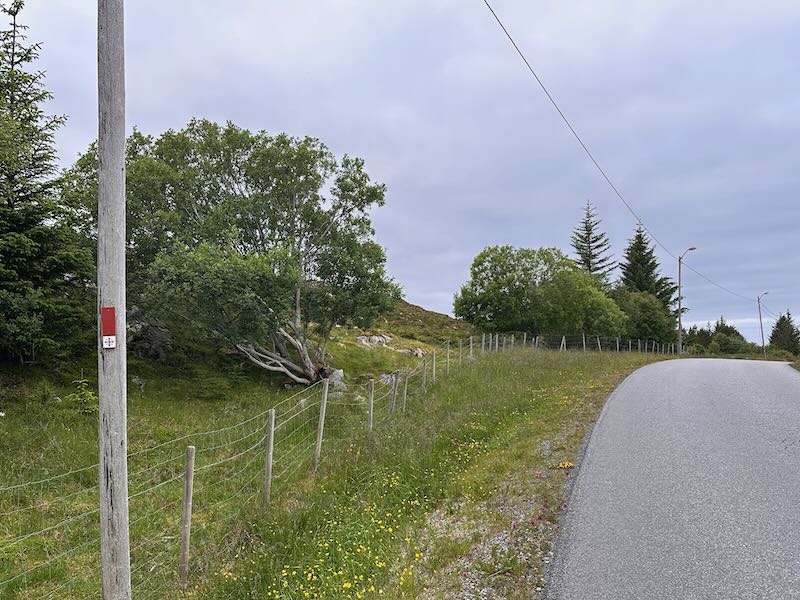

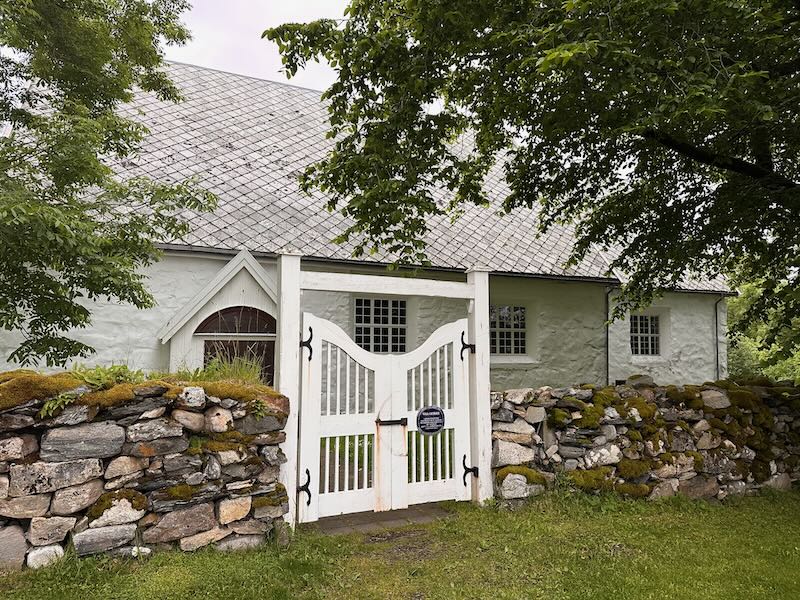
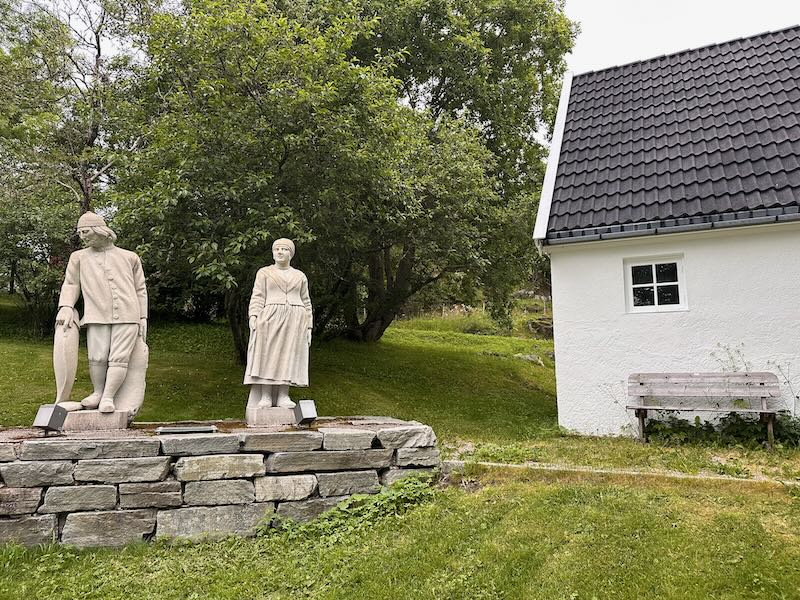
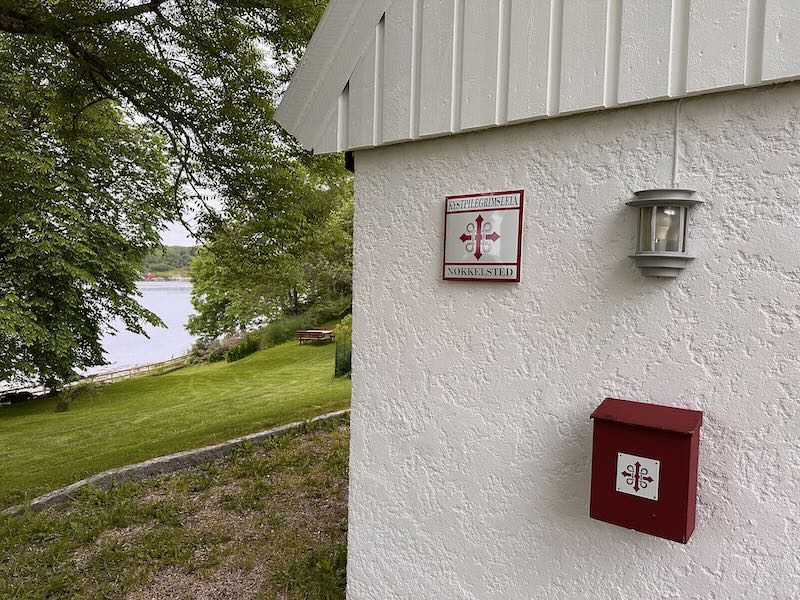


That day I had crossed Hitra. Half of the route was absolutely beautiful, and the other half was beautiful too, but it followed a busy road. Luckily, Norwegian drivers are incredibly considerate to cyclists and always give you plenty of space.
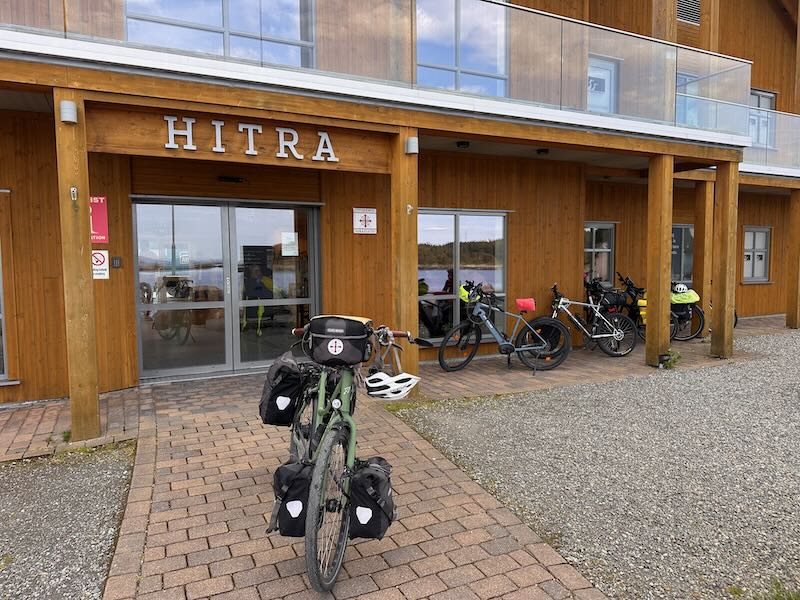
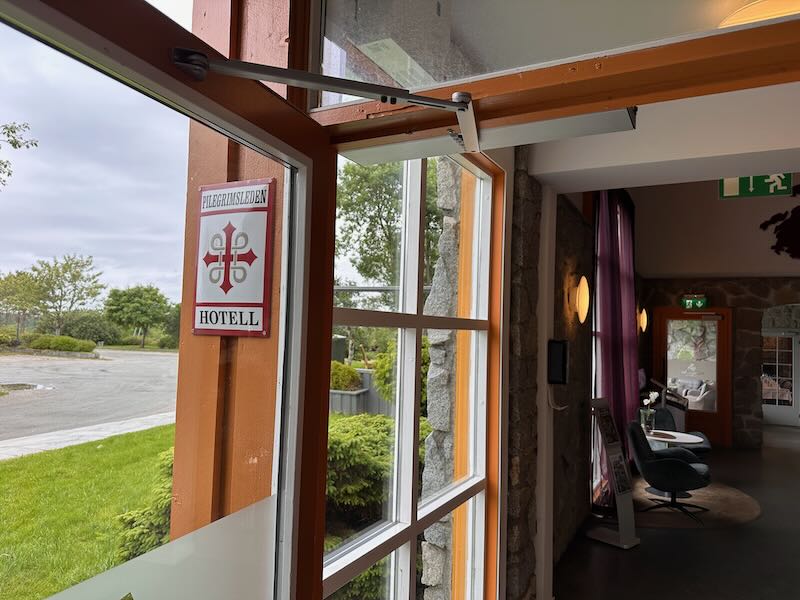
I didn’t feel like camping, so I chose a lovely place to stay: the pilgrim hotel Dolmsundet Hotell Hitra. Pilgrims get a generous 25% discount here!

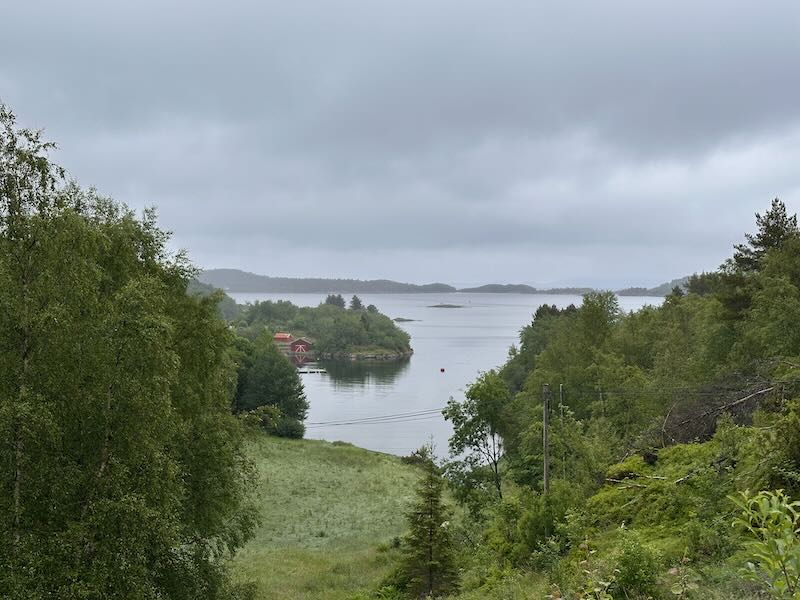
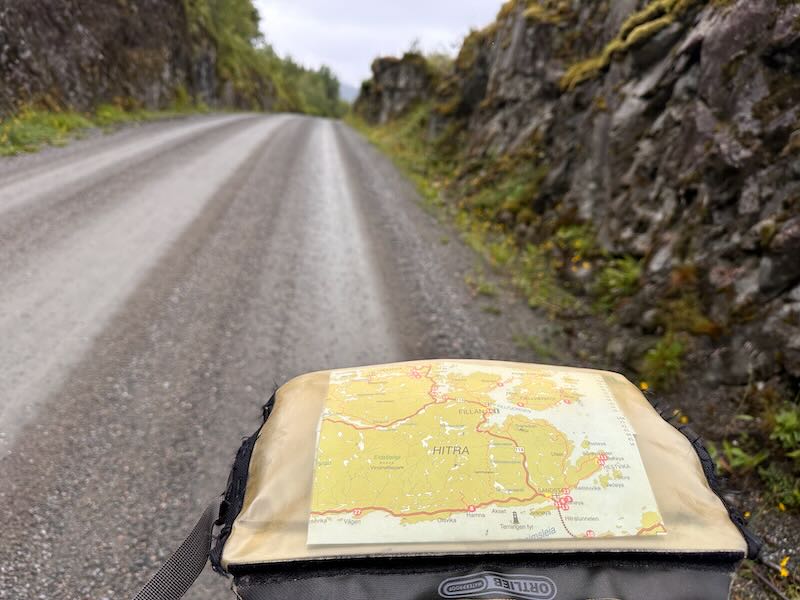

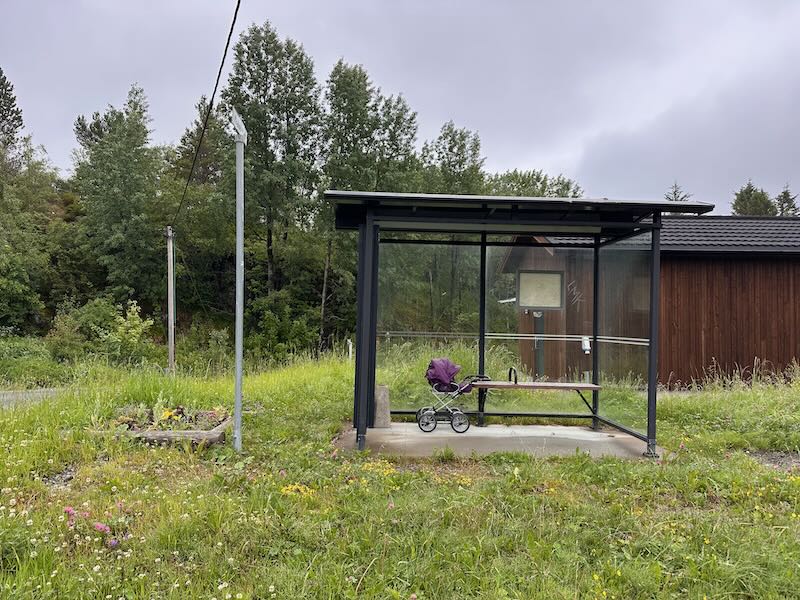


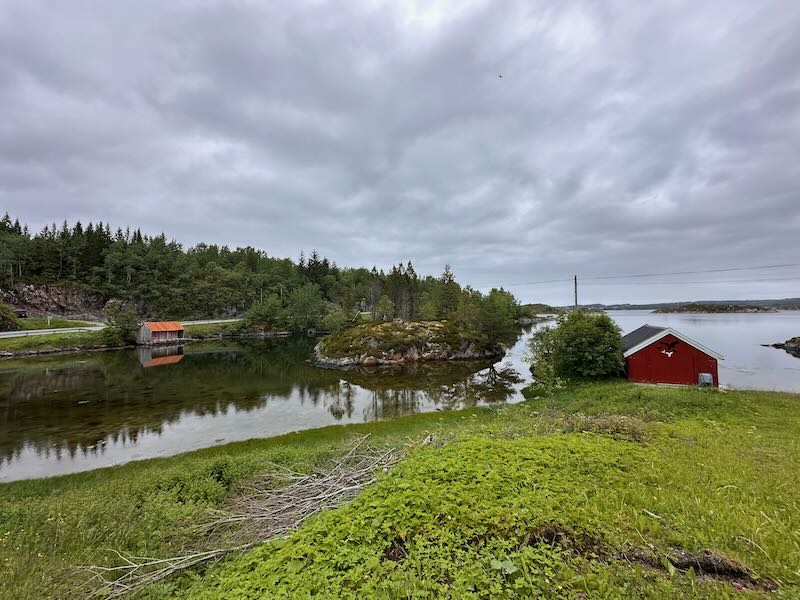

Sula
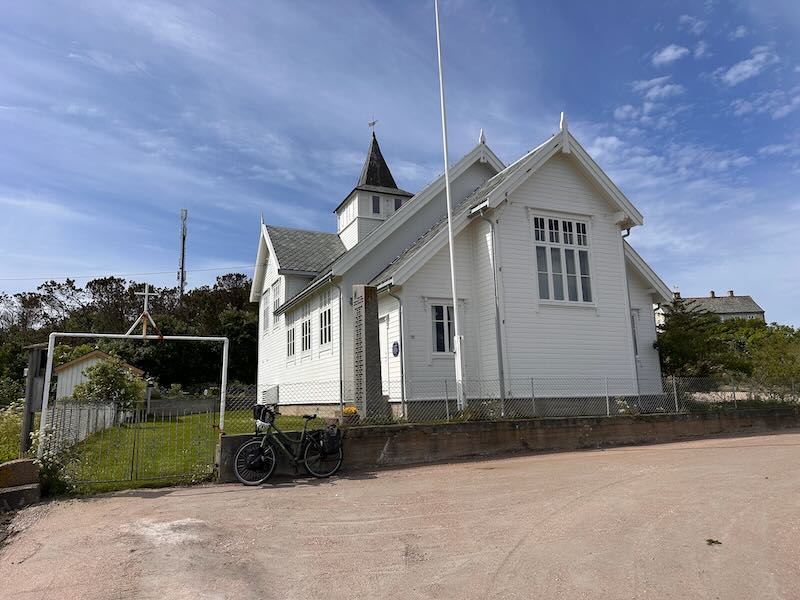
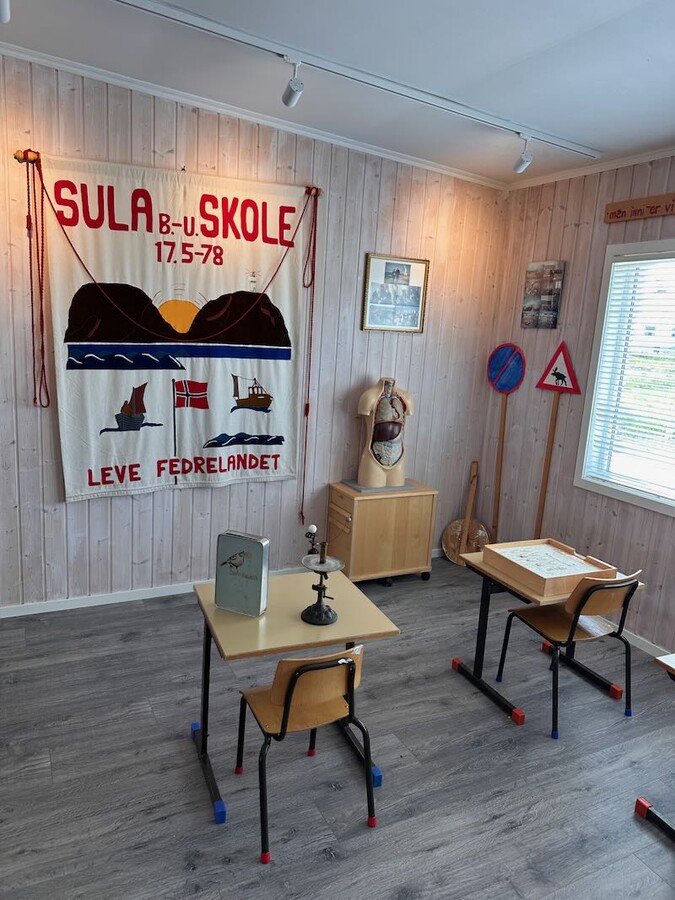
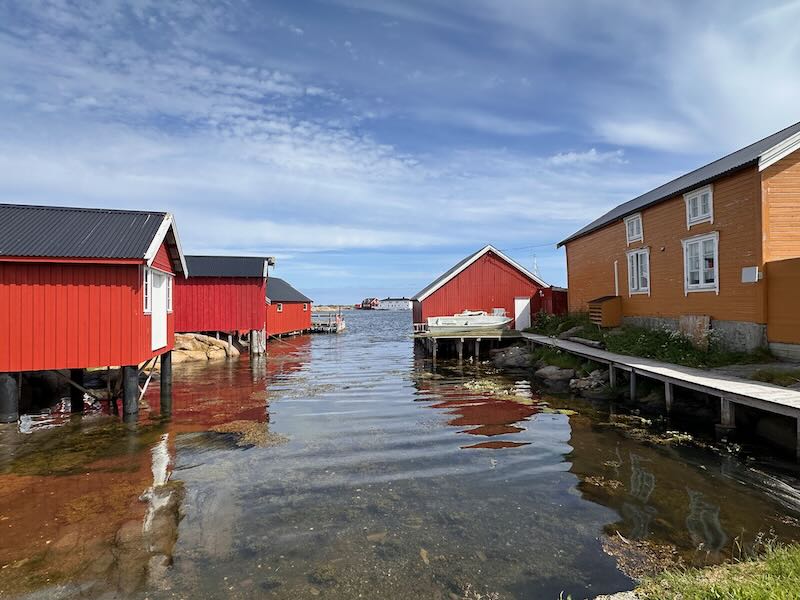
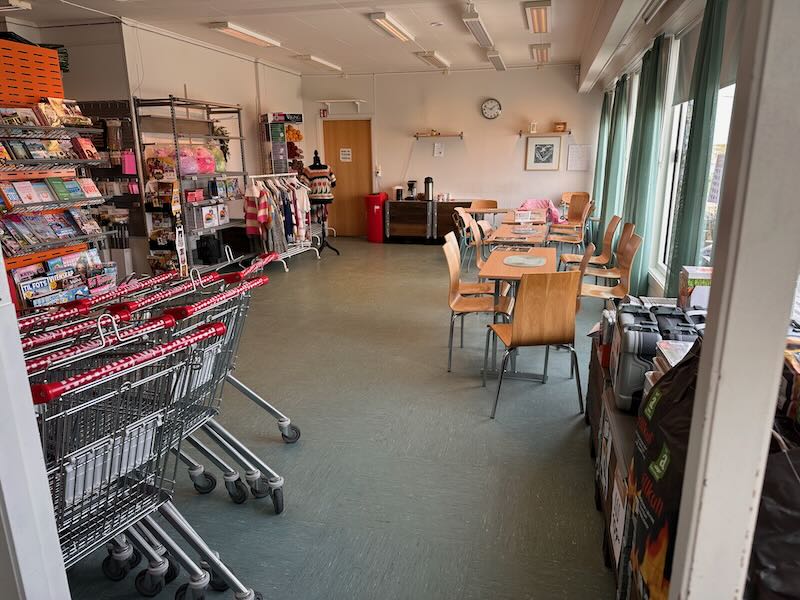
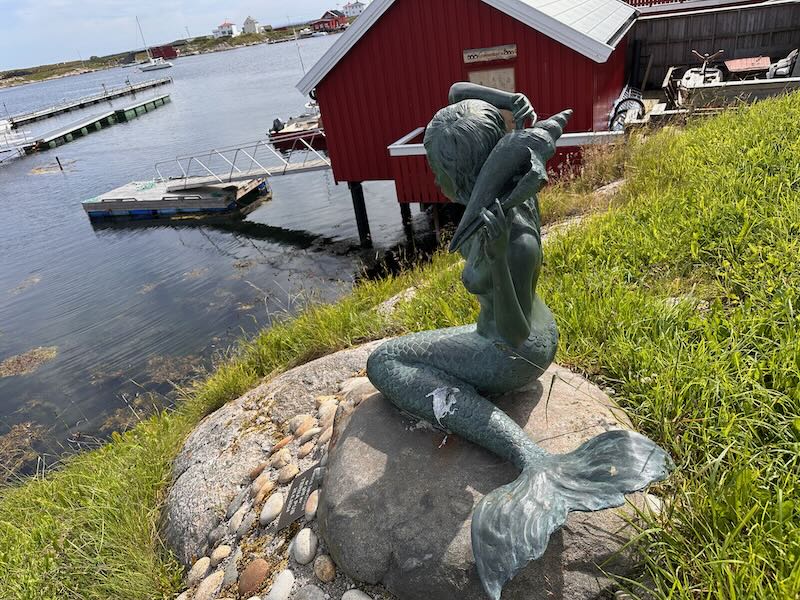
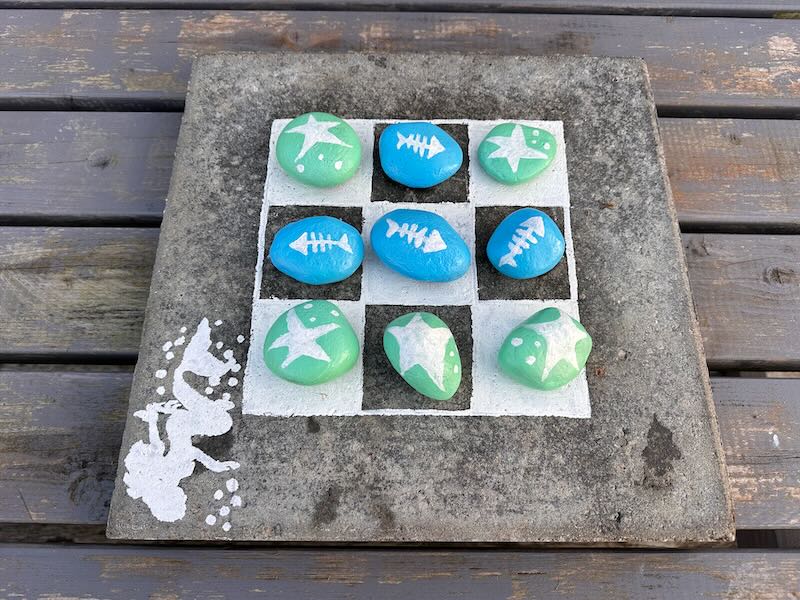
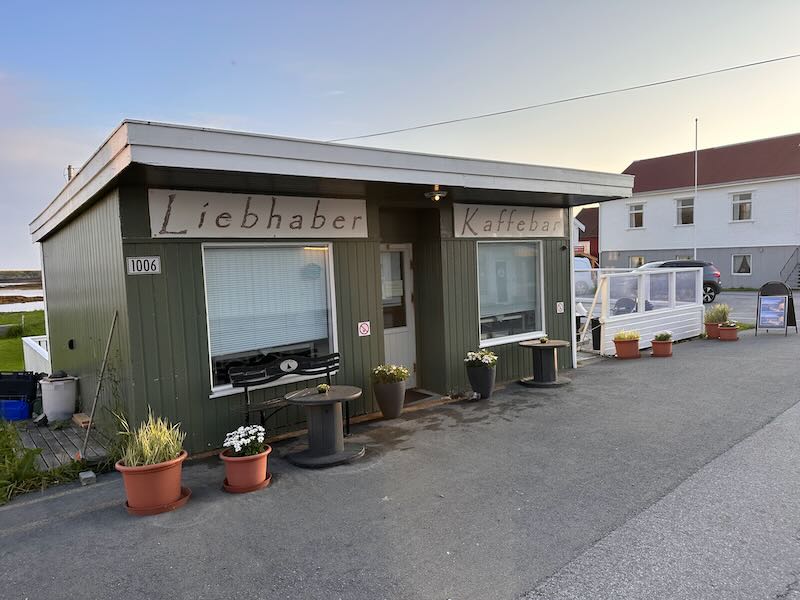
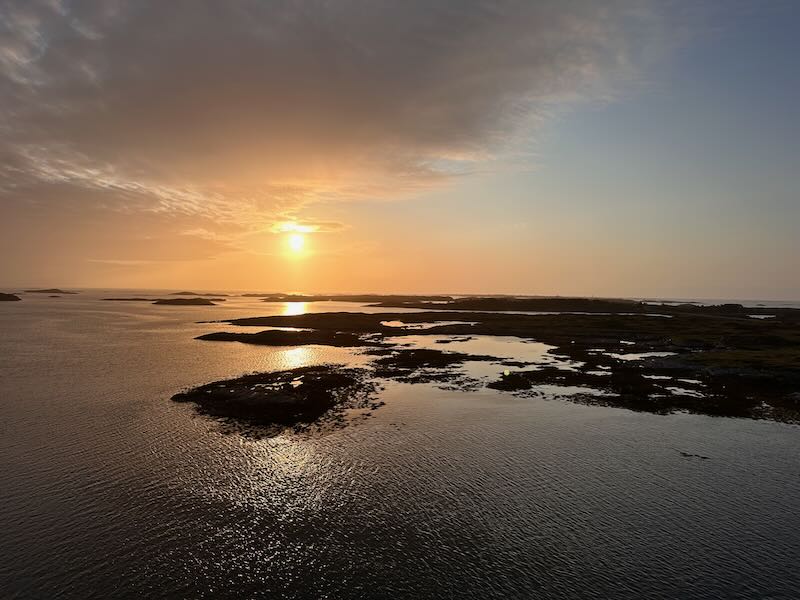
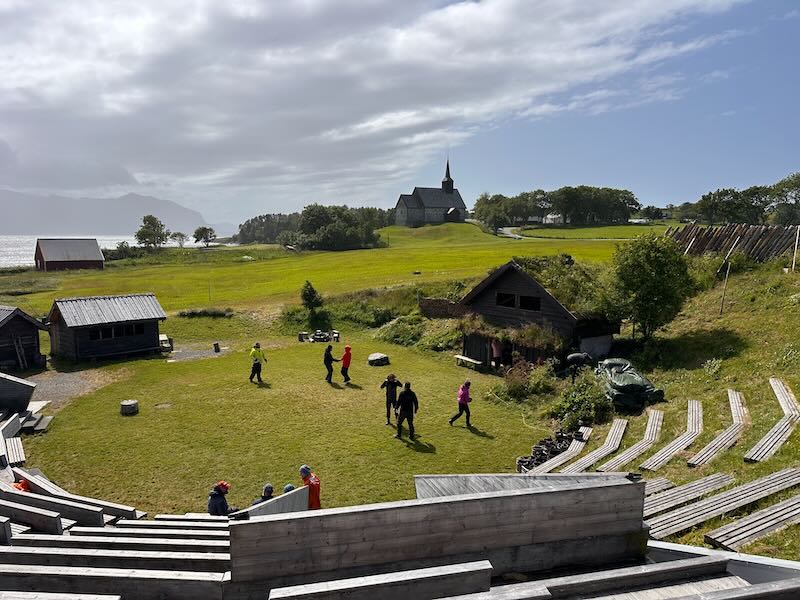
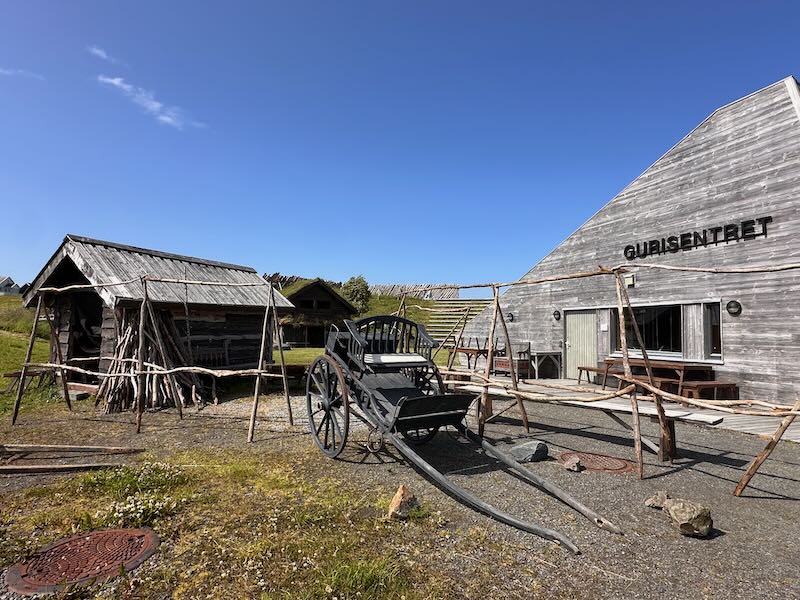
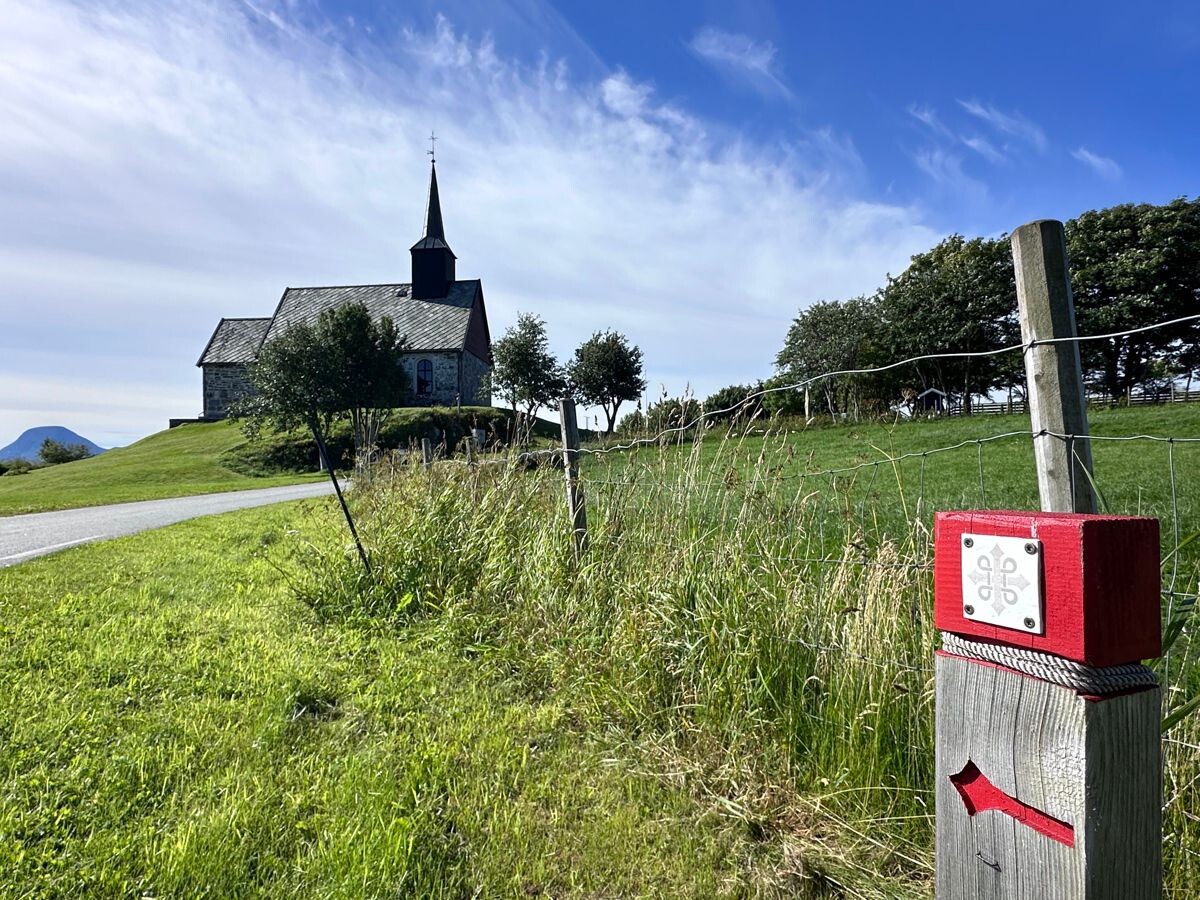
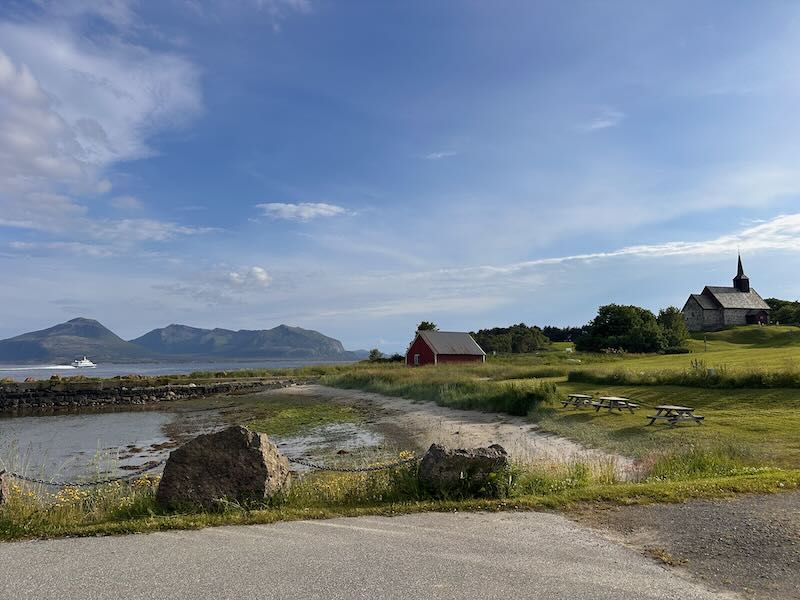
On Wednesday, I visited this most remote of the key sites. I explored the church, stamped my pilgrim passport with the coveted stamp (accidentally breaking a web designer’s life’s work in the process), visited the museum, checked out the campground, did some shopping at the mini supermarket (which also houses a café that sells hand-knitted sweaters), chatted with some locals, and cycled around a bit. By the way, the Little Mermaid from Copenhagen has a sister here. The last photos are taken from the ferry.
Getting there and back was easier than I had expected. As a cycling pilgrim, you can reach Sula by crossing Hitra and Frøya. You can cycle most of the way, but between Hitra and Frøya you’ll need to take a bus because the two islands are connected by a tunnel where cycling is not allowed. From Frøya, there’s a ferry to Sula.
However, you can also take a bus all the way from your arrival point on Hitra to the ferry terminal on Frøya, and from there catch the ferry to Sula. It’s quick, easy, and affordable. Everything connects smoothly, even in case of delays, which I experienced on the way back. You can bring your bike on the bus (space permitting, which usually isn’t an issue). E-bikes are allowed too, I checked with the bus driver. The bus ride costs only €3.84, and the ferry to Sula is free. You can stay overnight in pilgrim hotels on Hitra, Frøya, and Sula, or at campgrounds on Hitra and Sula. There are also Airbnb options on the islands.
On the way to Sula, a stop on an other island:

Sula church:


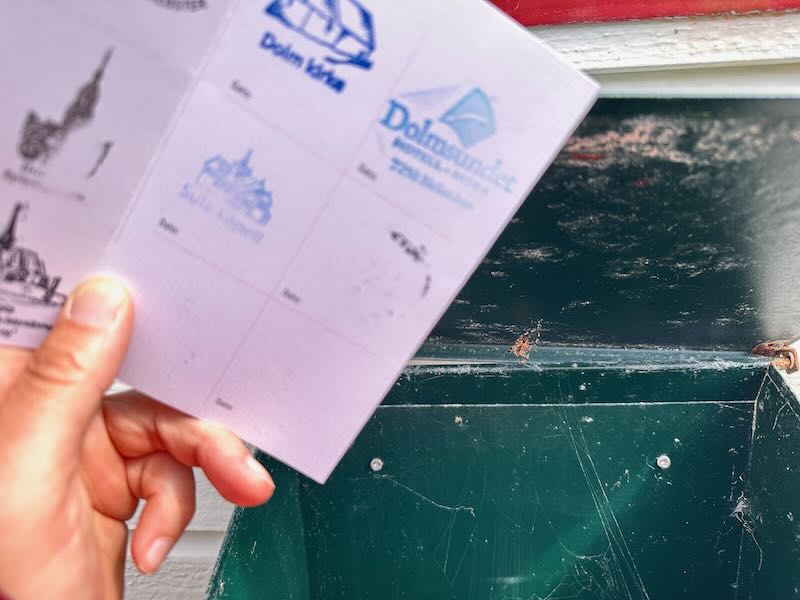
Sula:

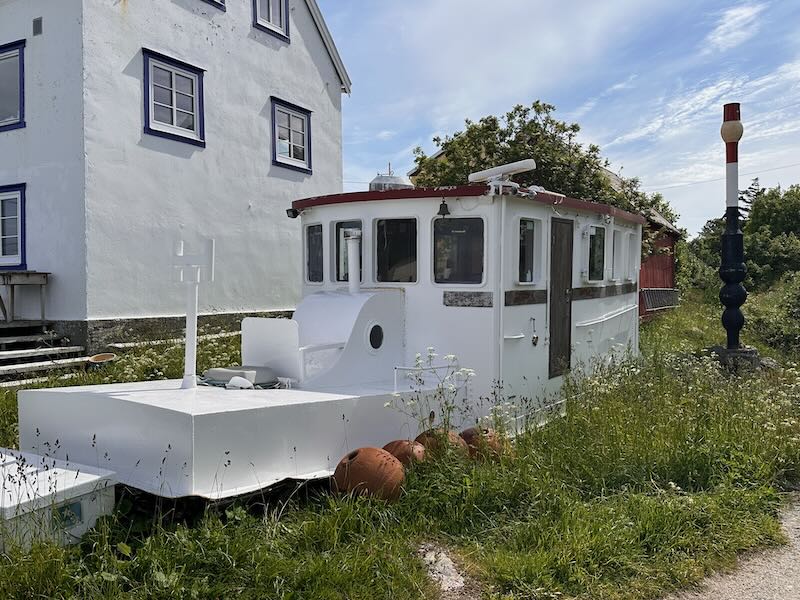
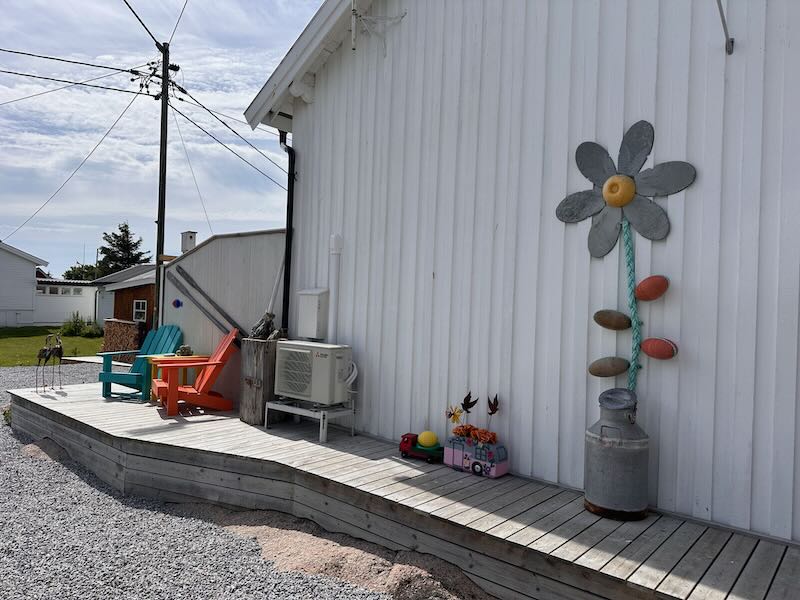

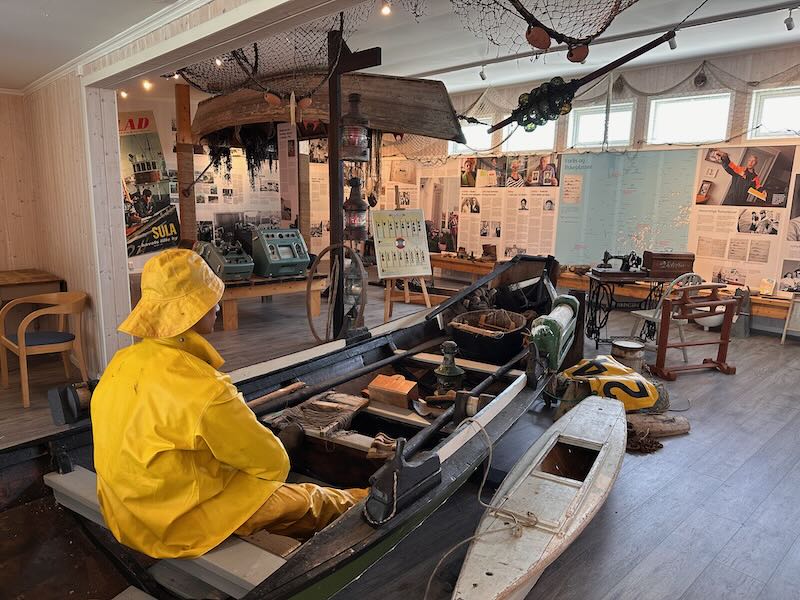

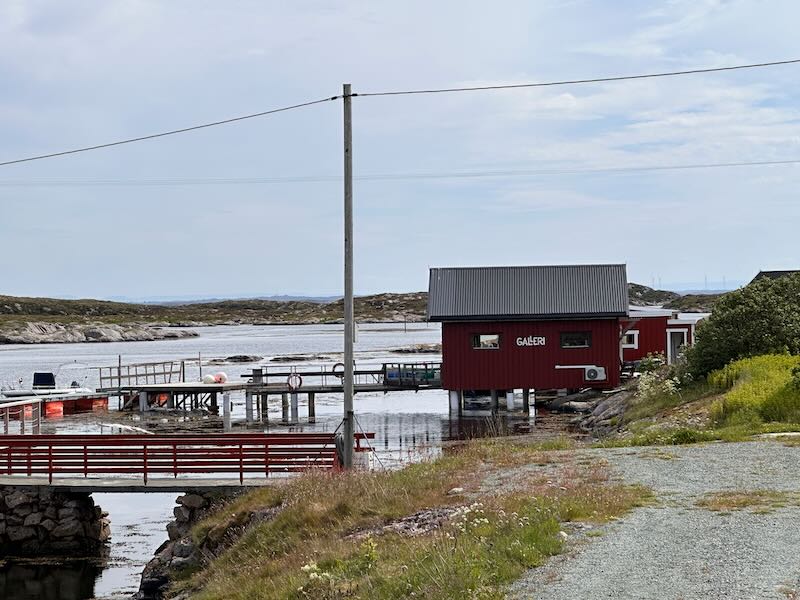
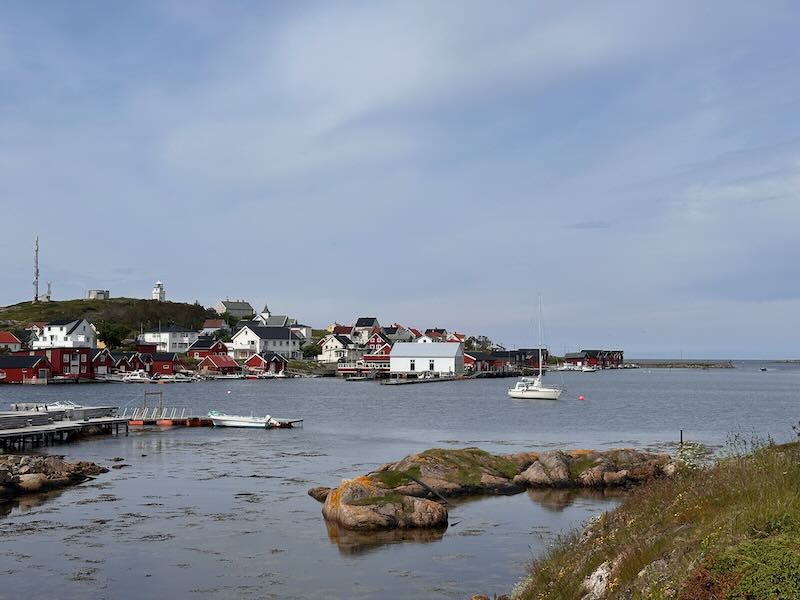

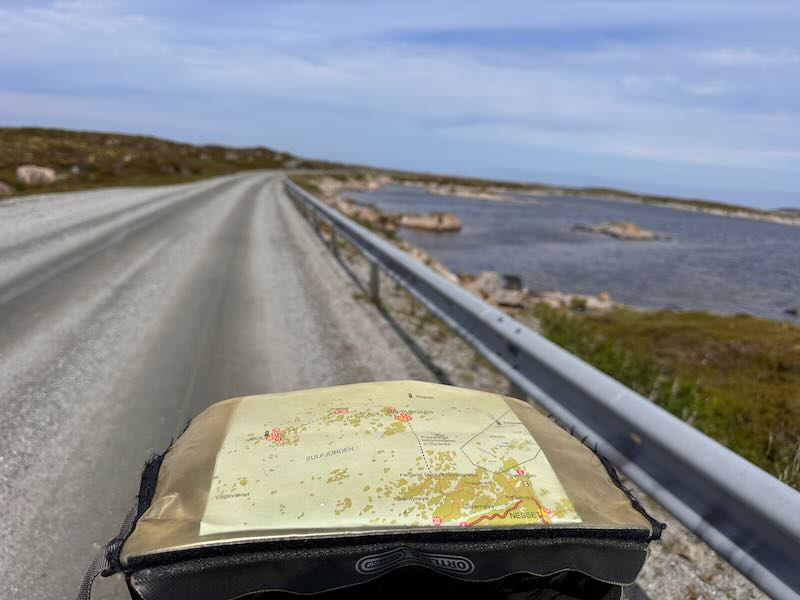

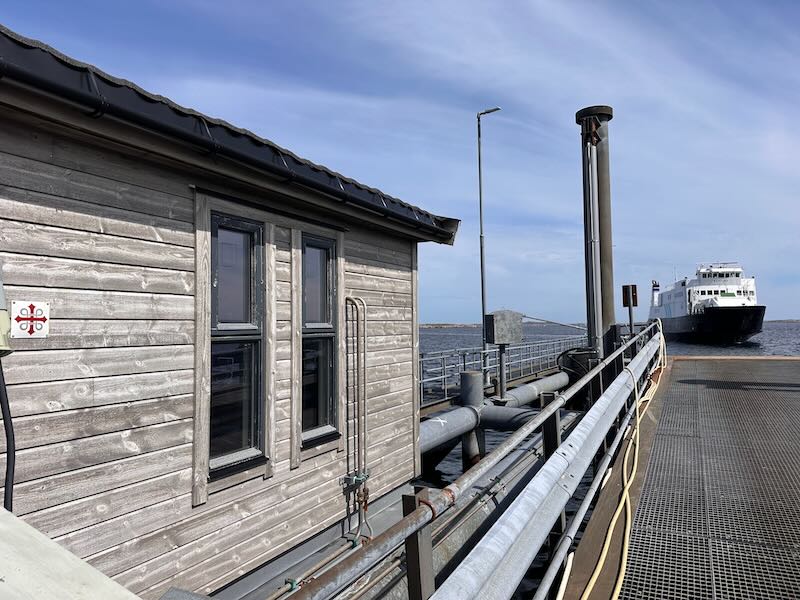
On the way back to Frøya:
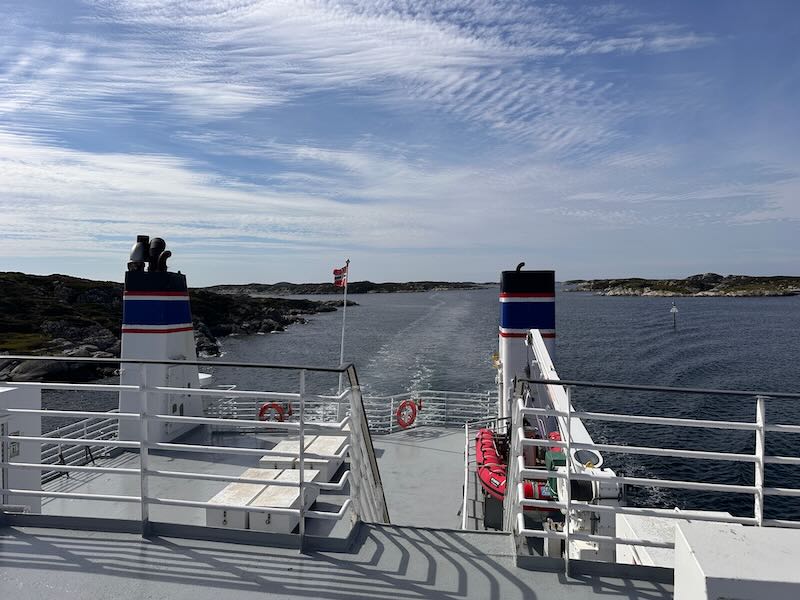
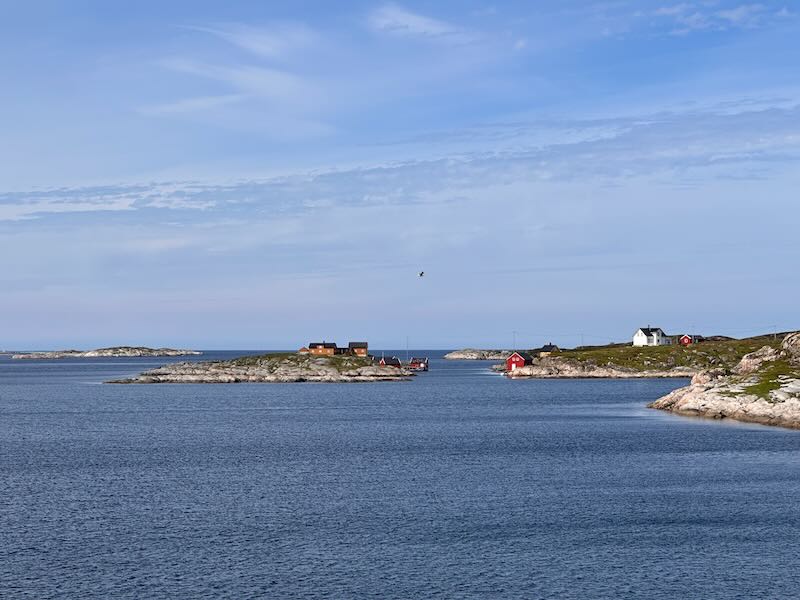
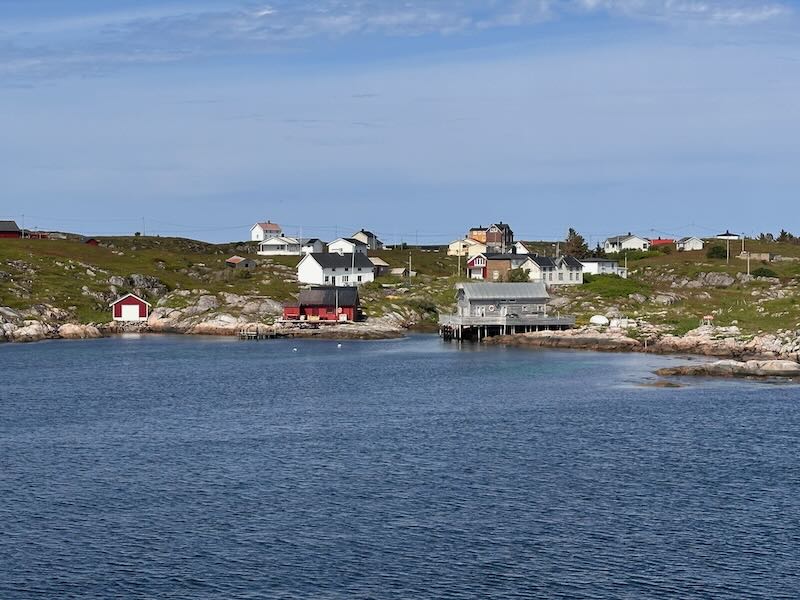
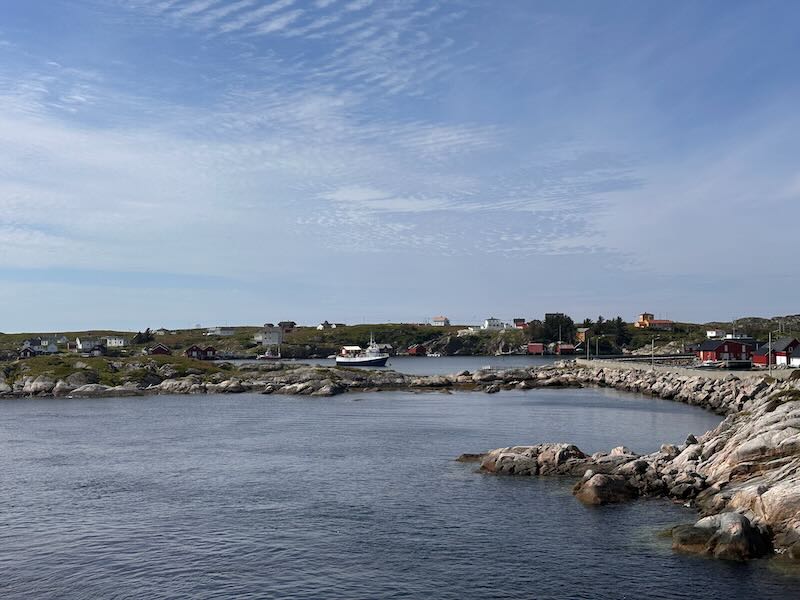
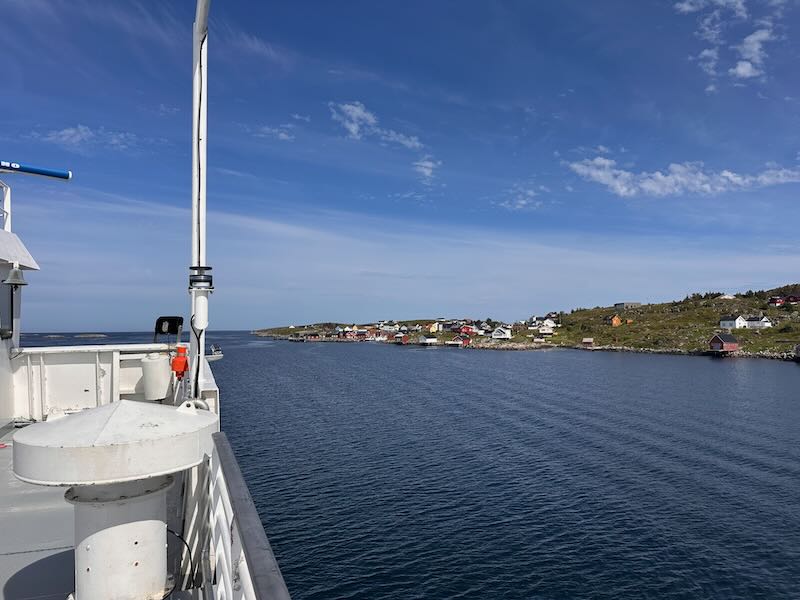
Veiholmen
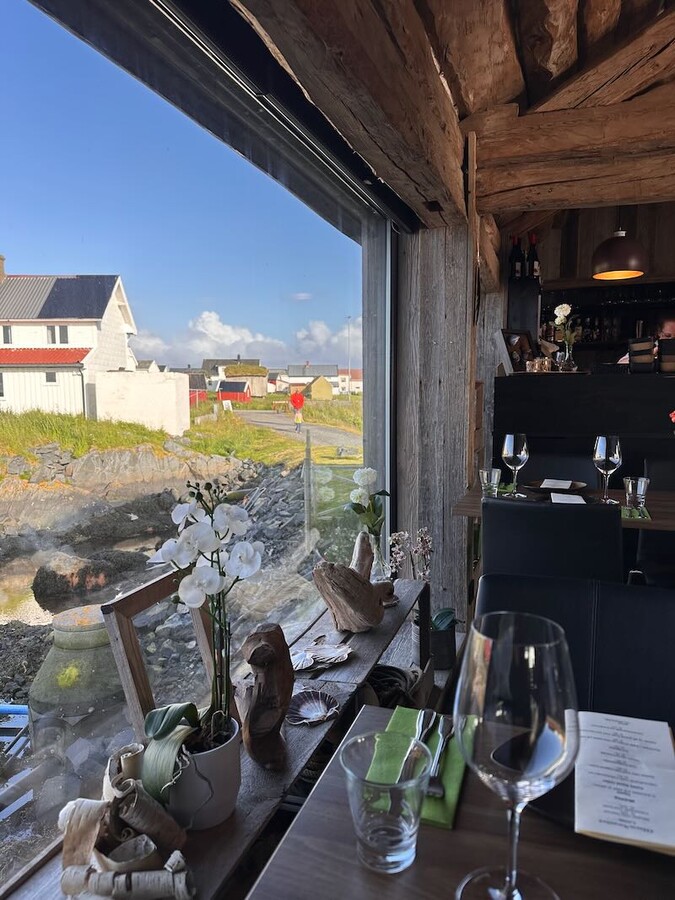
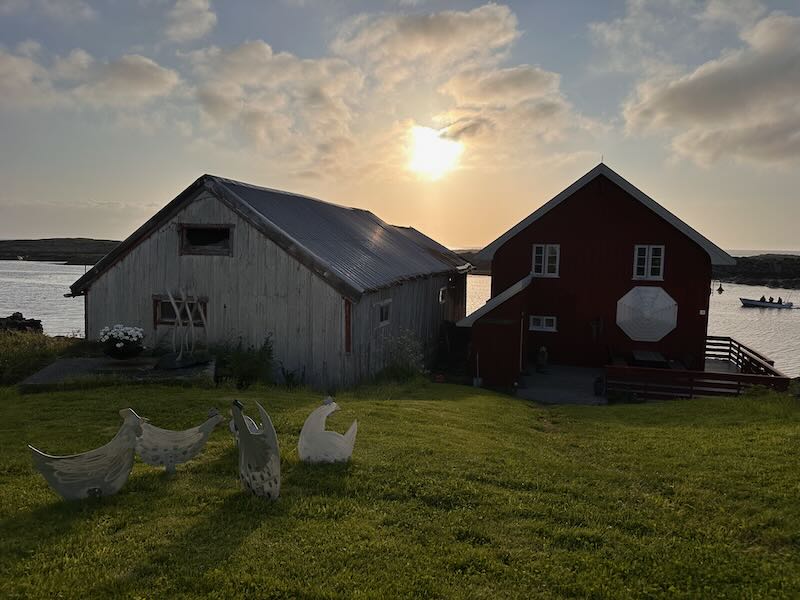
On Friday evening, Ragnhild, the pilgrimage leader from the Smøla Pilgrim Centre, took me to the small island of Veiholmen, which is connected to Smøla by a series of bridges. We enjoyed a lovely meal at the idyllically located restaurant Olsen Naustet and went for a walk around the island. The residents of Veiholmen are incredibly hospitable, and to our surprise, we were spontaneously invited into someone’s home for a visit.
Restaurant Olsen Naustet:

The house we were invited:
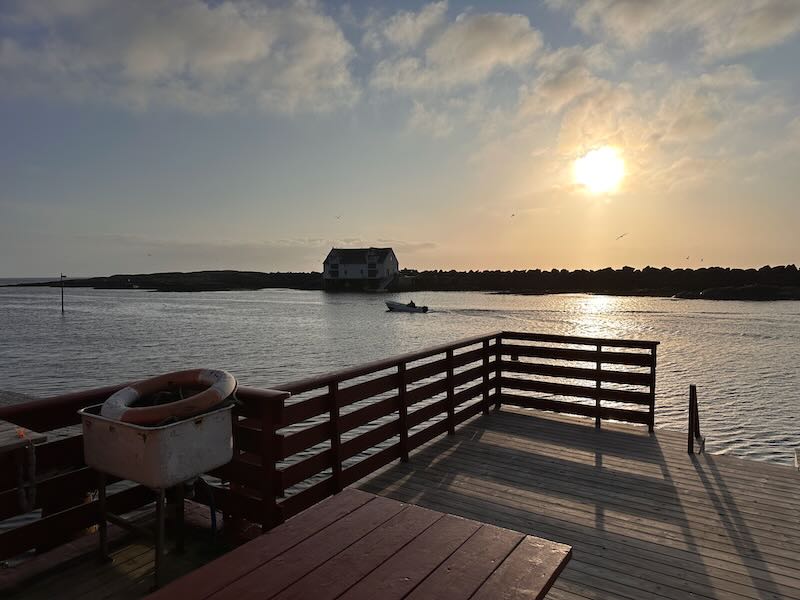
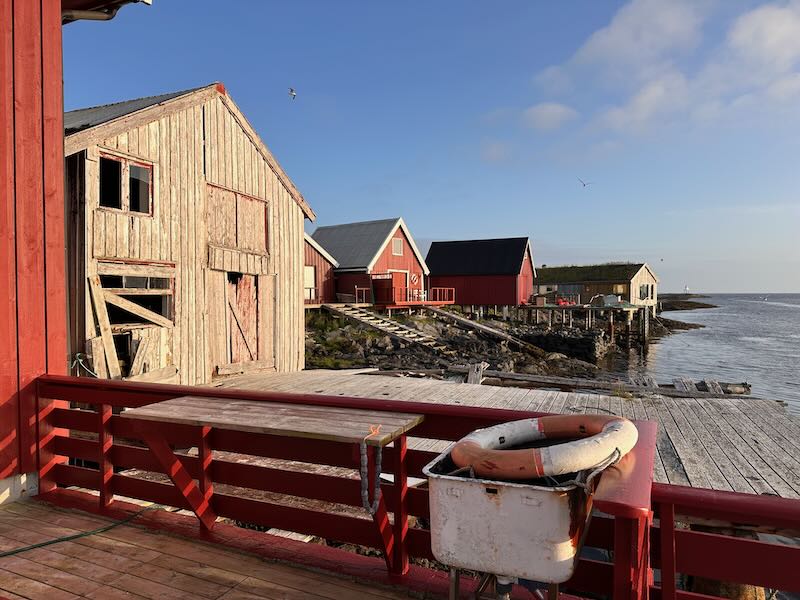
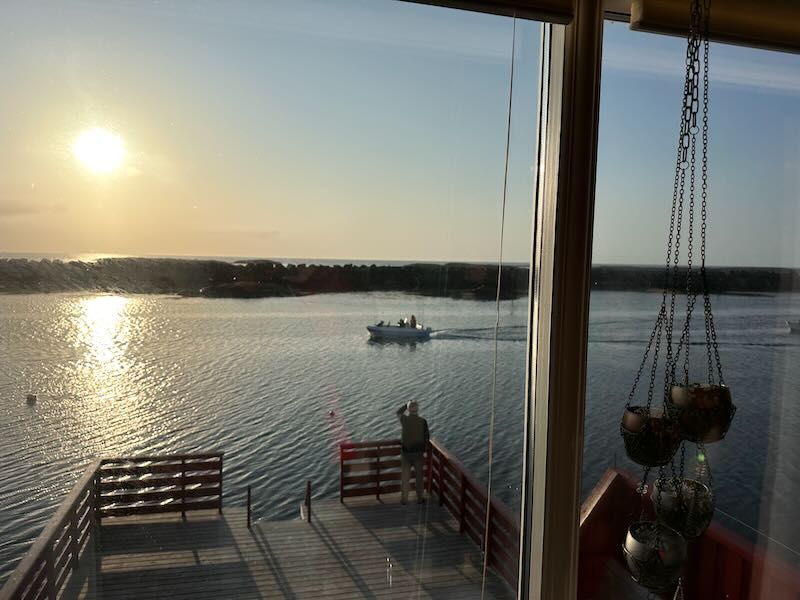
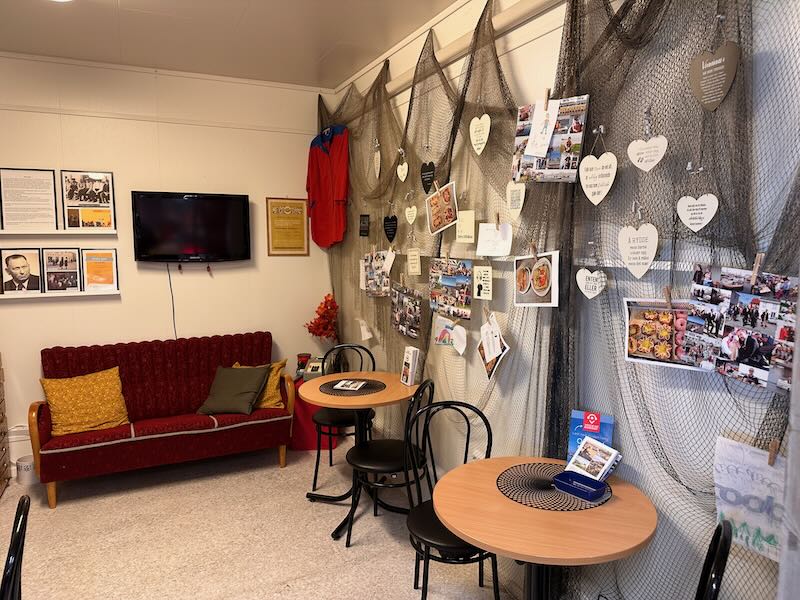
Almost all local supermarkets on islands has also a café. Here on Veiholmen you can also get a hot meal here:
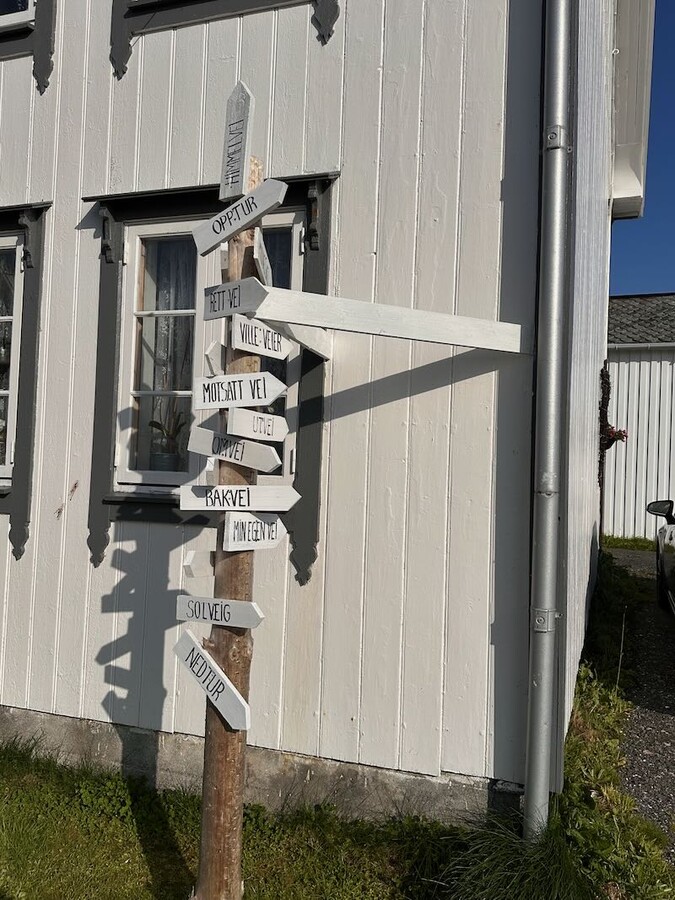
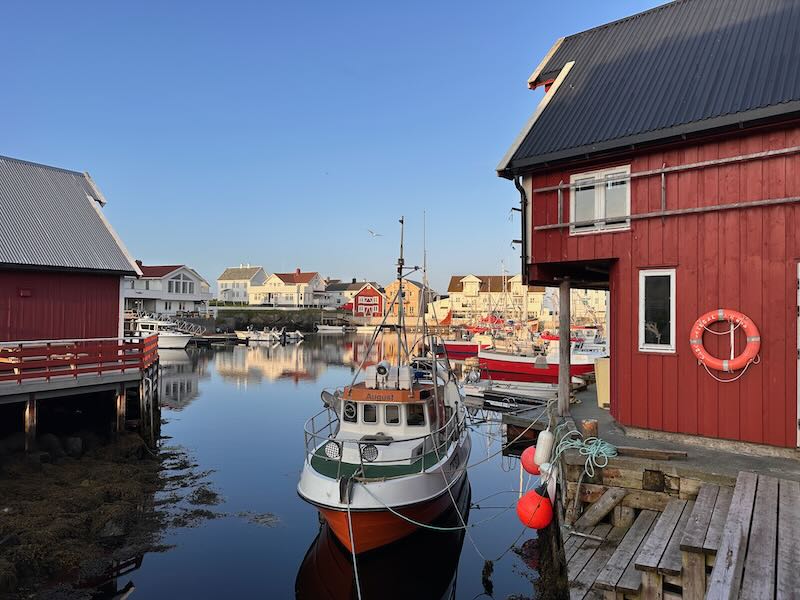
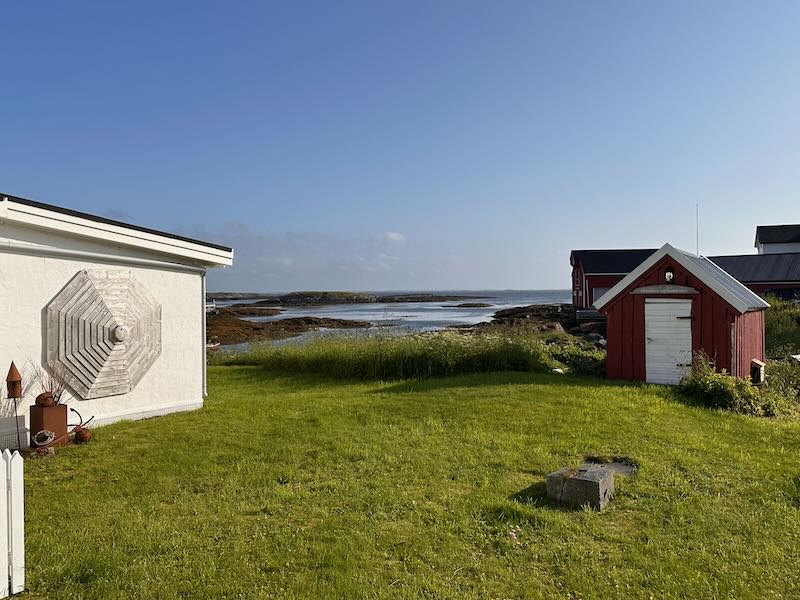
Veiholmen:



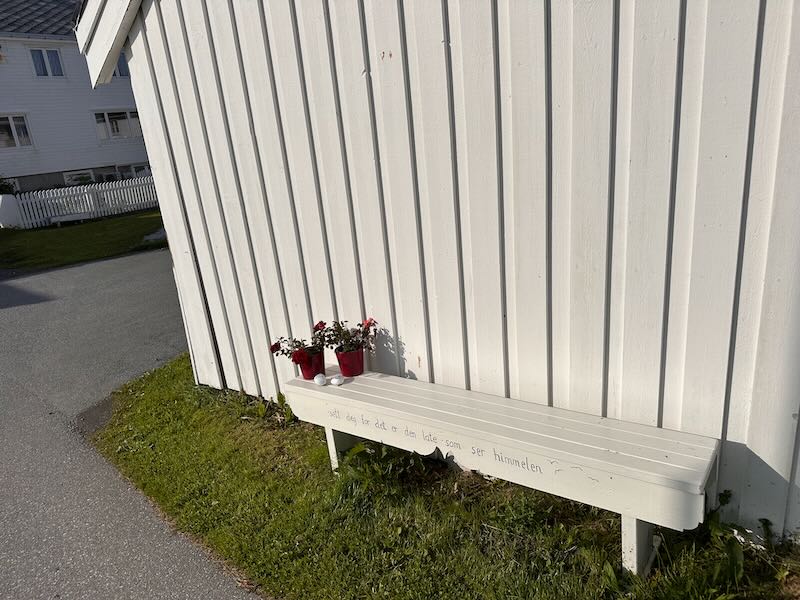
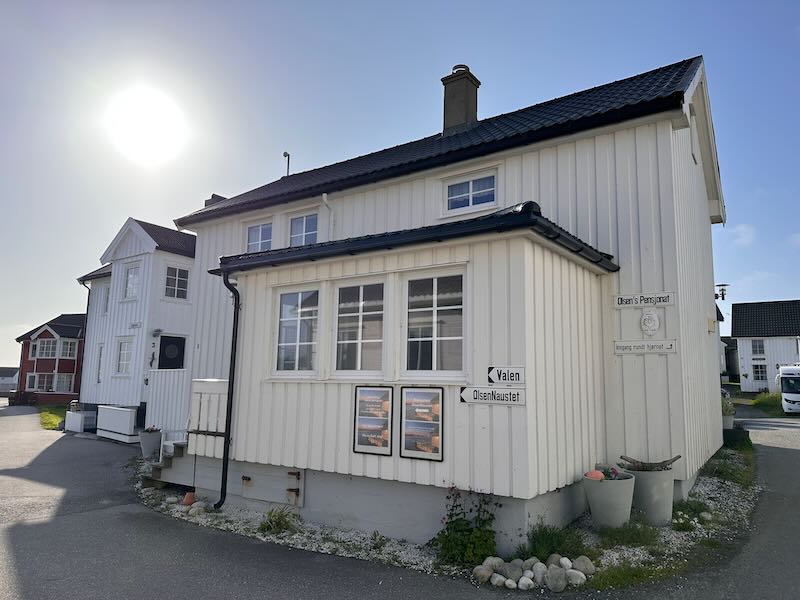
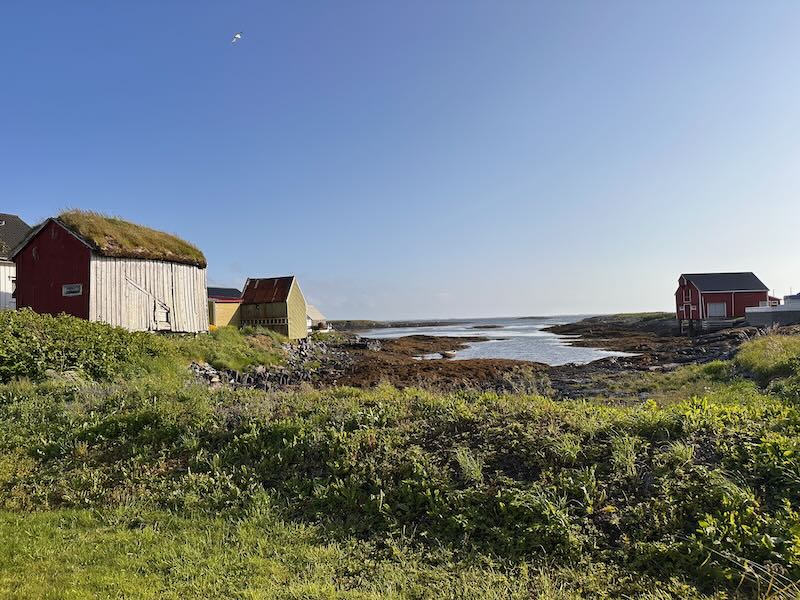
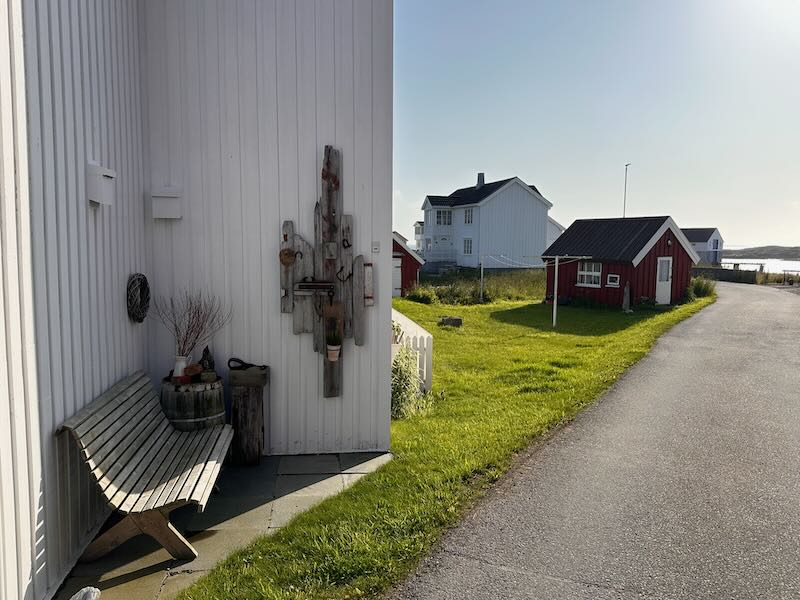

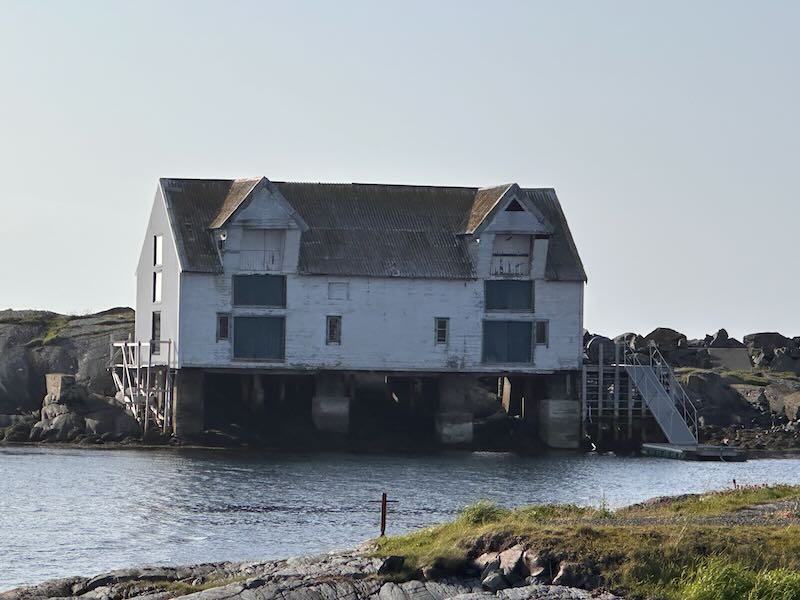
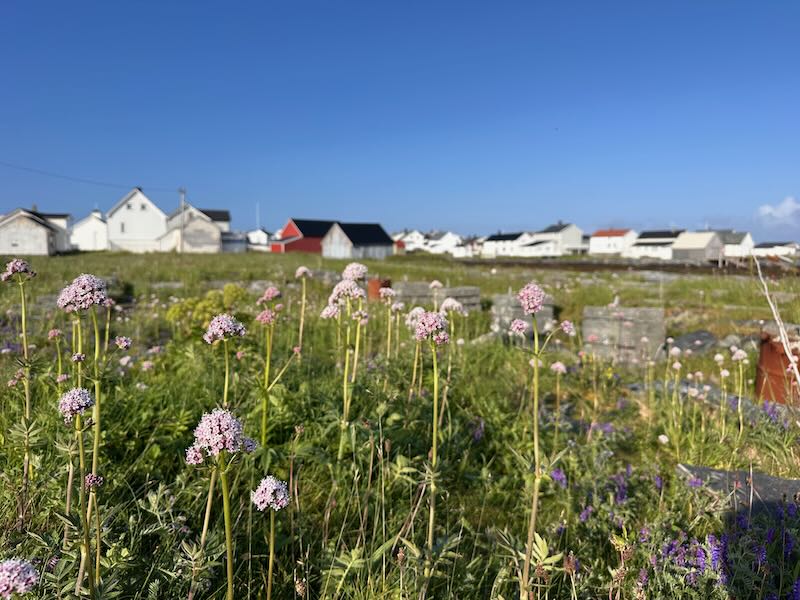

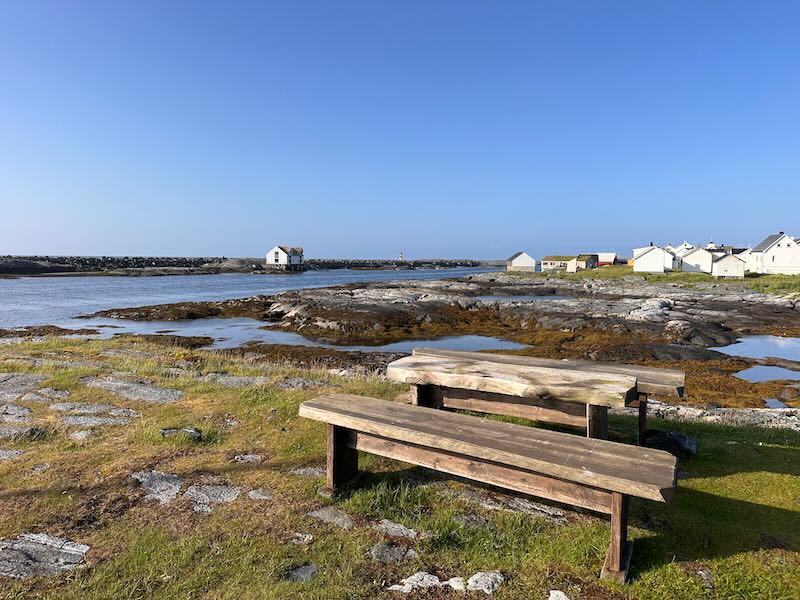

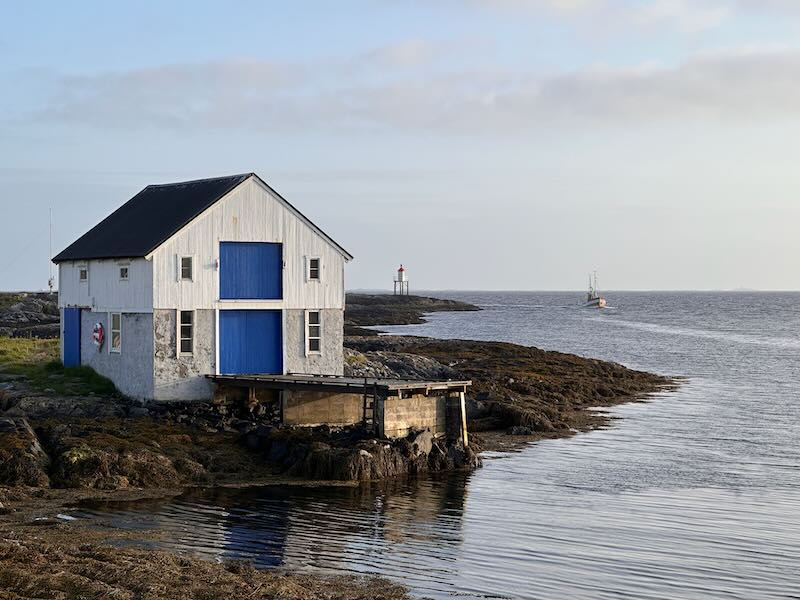


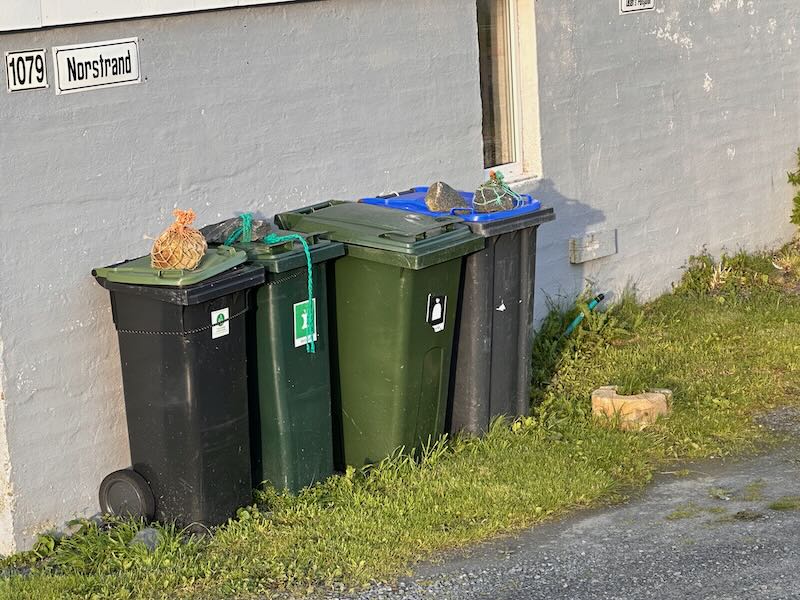
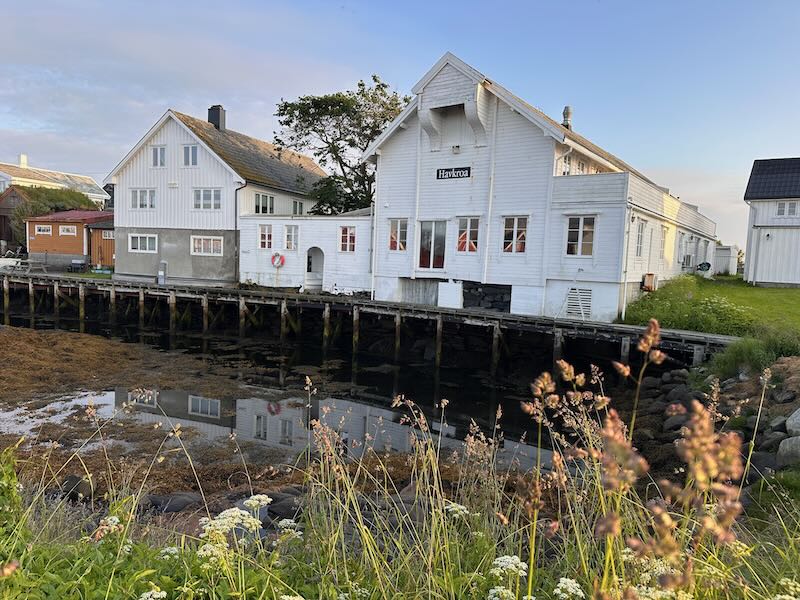



Many houses on Veiholmen are decorated with these 'lids'. Caught fish used to be put in a circle to dry. These lids went on top of that when it rained:
.
Smøla
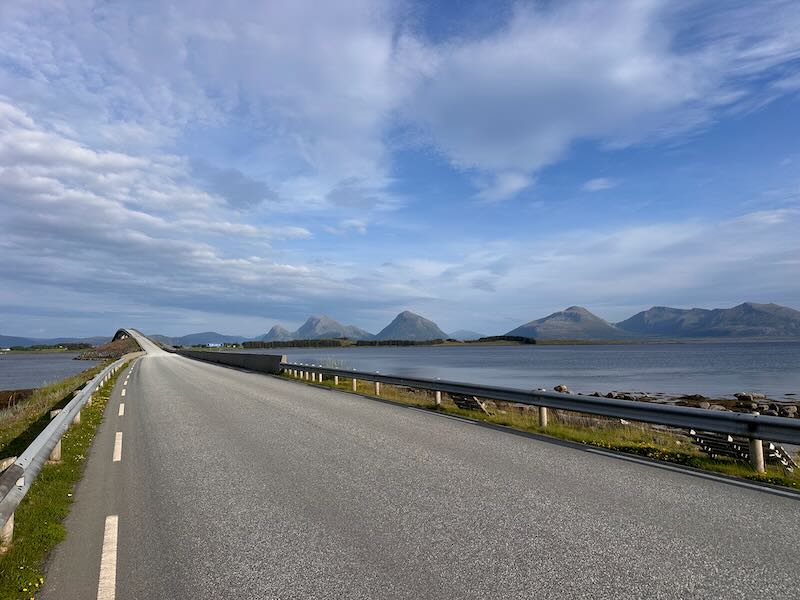
Last year, I cycled a loop around Smøla and Veiholmen. This 90 km route will also be added to the guidebook as an optional extra. It’s almost entirely flat, making it perfectly doable in a single day, especially with Eco Camp Norway as your ideal starting point. For at least half the route, you’re guaranteed to have the wind at your back ;-) You can also shorten the route, as two roads cut directly across the island. Or you can spread it over two days. There’s a pilgrim accommodation available on Veiholmen.
Smøla is accessible via the hurtigbåt (express ferry) from Kristiansund, or by car ferry from Sandvika, which is free for cyclists.








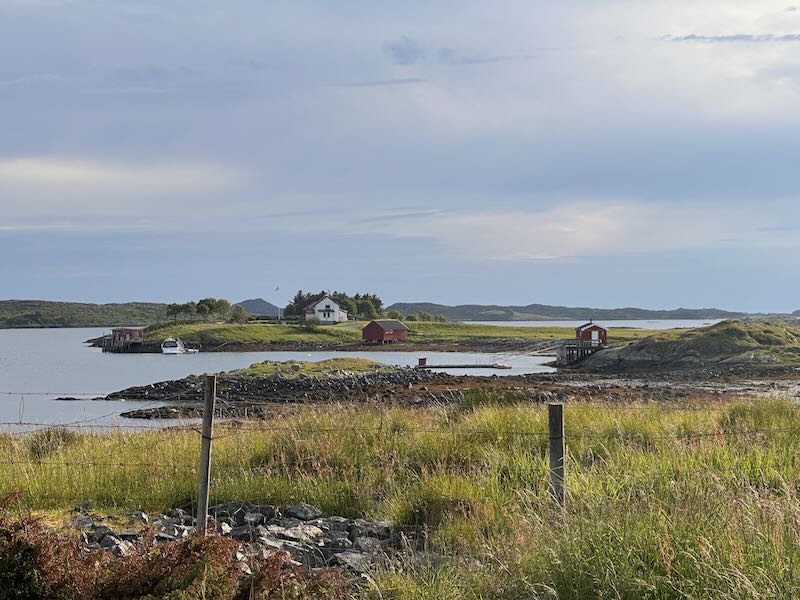

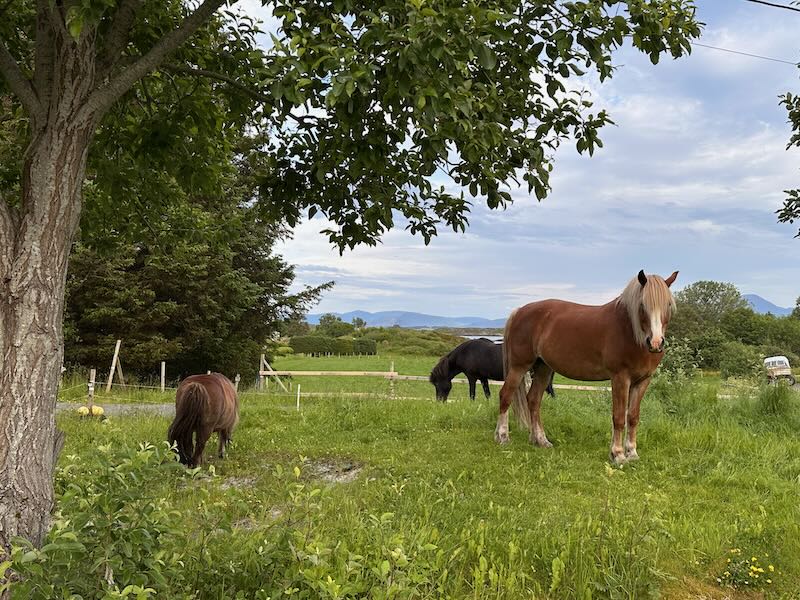
“Maybe you should mention that in the guide,” Ragnhild said. “That you have to accept the weather along the coast here, and that sometimes, you simply have to wait. Sometimes even a full day. The ferries do it too.” And she definitely has a point. The weather is very unpredictable, and you have to take everything into account. While the Netherlands may be experiencing tropical heat this week, here in Norway it’s chilly. Yesterday it was nearly stormy, and today there’s still a strong wind and plenty of rain. Fortunately, I’m warm and dry in Mona’s pilgrim hostel at Eco Camp Norway.
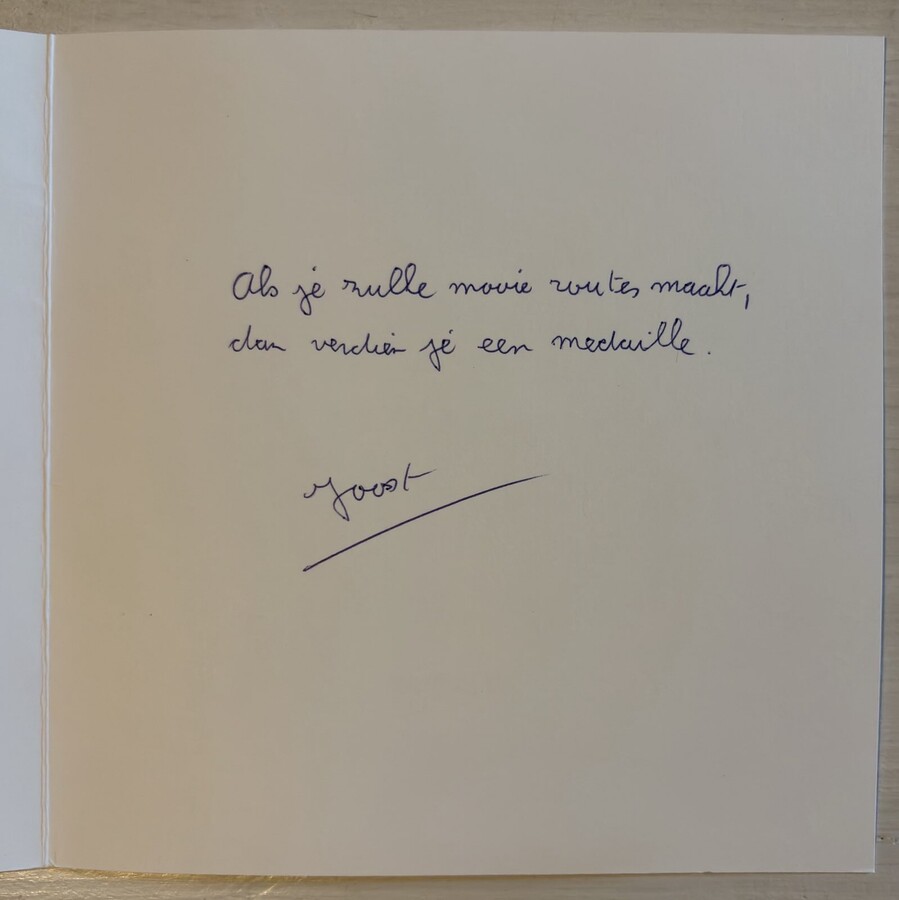
Last year and the year before, when I was here with Remy, we had almost nothing but beautiful weather. Now, it’s a waiting game. I’ve only just arrived and will be here for a total of four weeks. So far, three test riders have completed the full route, a few are currently on the road, and others plan to cycle it later this summer. The first, Joost, already used up all the good weather in May. No wonder he was so enthusiastic about the route:

But maybe the weather doesn’t matter all that much. Rinus and Anke, who also had some great weather, were drenched with rain at times too, yet this route still became their magnum opus…

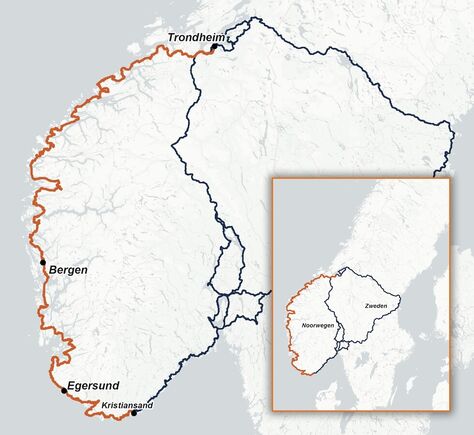
In other words: rain or shine, this route is absolutely breathtaking! This year, I’m cycling from north to south and only riding the sections I haven’t done yet. In consultation with the pilgrimage leaders, a few parts of the route have been adjusted, and I’ll be cycling those new stretches as well. Thankfully, most of what’s left are now just day trips, starting from the car in the morning and returning there in the afternoon.
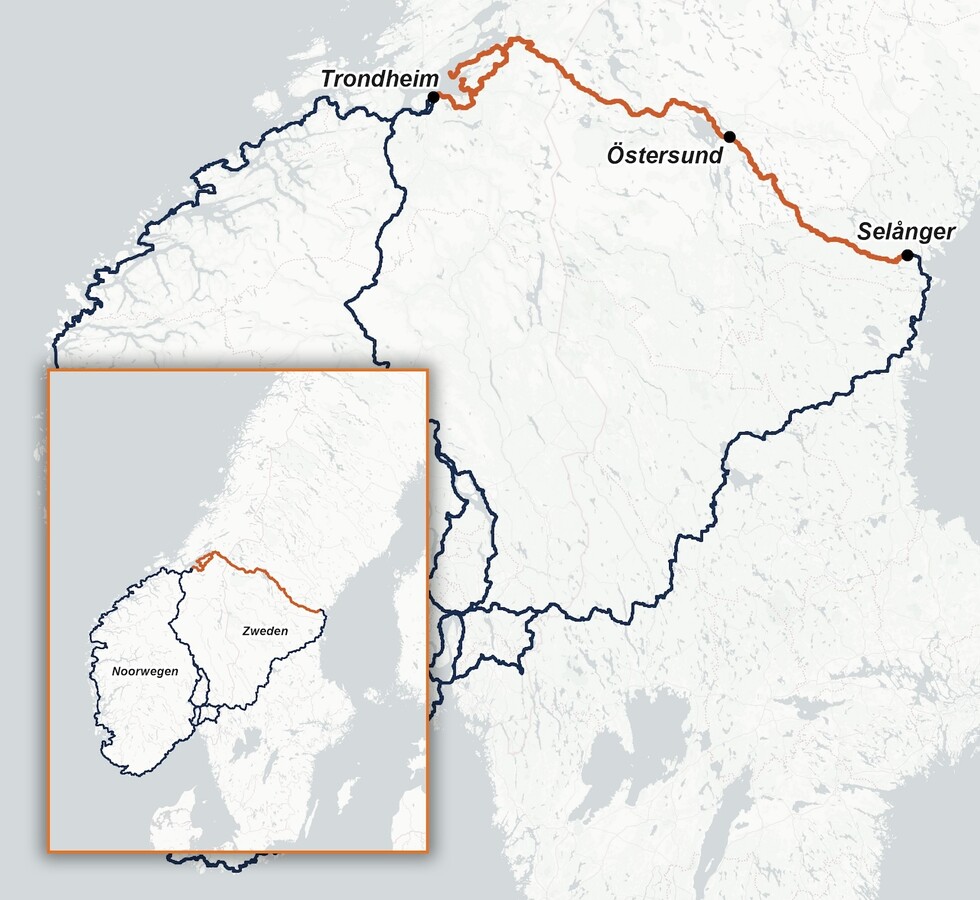
Trondheim / Nørgar Voll
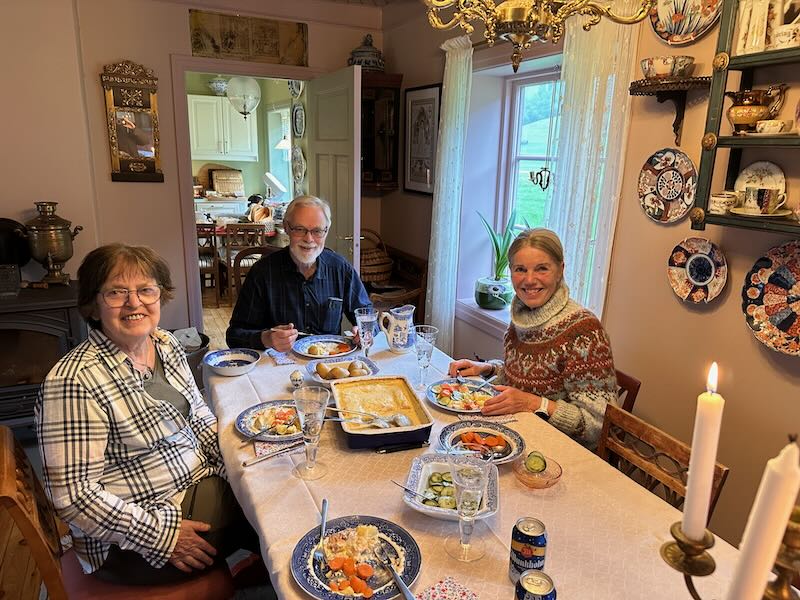
Between leaving Sweden and arriving in Smøla, I stopped in Trondheim and spent a night with Joar and Magni. My time in Trondheim was short; I had two appointments at the Pilgrim Centre before heading on to Nørgar Voll, Joar and Magni’s pilgrim guesthouse. To my surprise, Halldis (the pilgrimage leader from Dovrefjell) showed up unexpectedly! We didn’t think we’d be able to meet this summer.
Tomorrow, I continue heading south! Weather permitting...