

Saturday, 18th October, 2008
Distance cycled: ca. 12 km
Weather: sunny and warm, 28˚ C
Things do need getting used to: the bike, cycling on the left, reading the map with only Japanese signs and ... just getting used to Japan.
Erico has to work all day so I get on my bike to explore Moriyama. I have a map, copied from a street-atlas, and cycle out of town in the direction of Biwa-ko, the lake I want to cycle round in a few days’ time. It is gorgeous weather today and I enjoy everything I see and marvel.
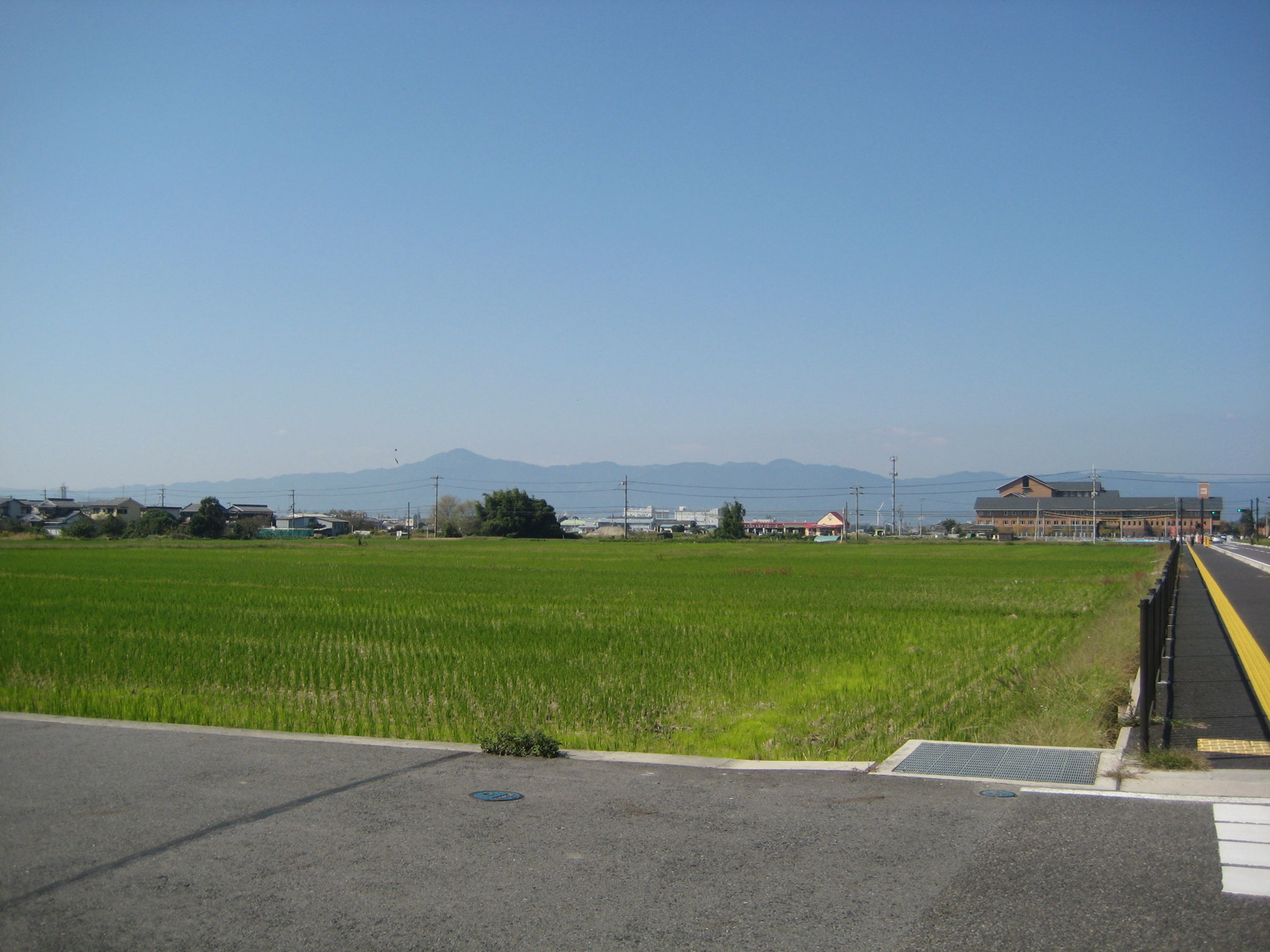
After about an hour, I come to the lake. It is a beautiful spot with an imposing view and some picnic tables scattered around. I rest for a bit, eat my lunch (rice-rissoles made by Erico) and cycle back to Moriyama. By this time, I have a sore back, sore knees, sore shoulders and saddle sores so I go straight home.
I’m very relieved to get off the bike. I’m never going to cycle again!
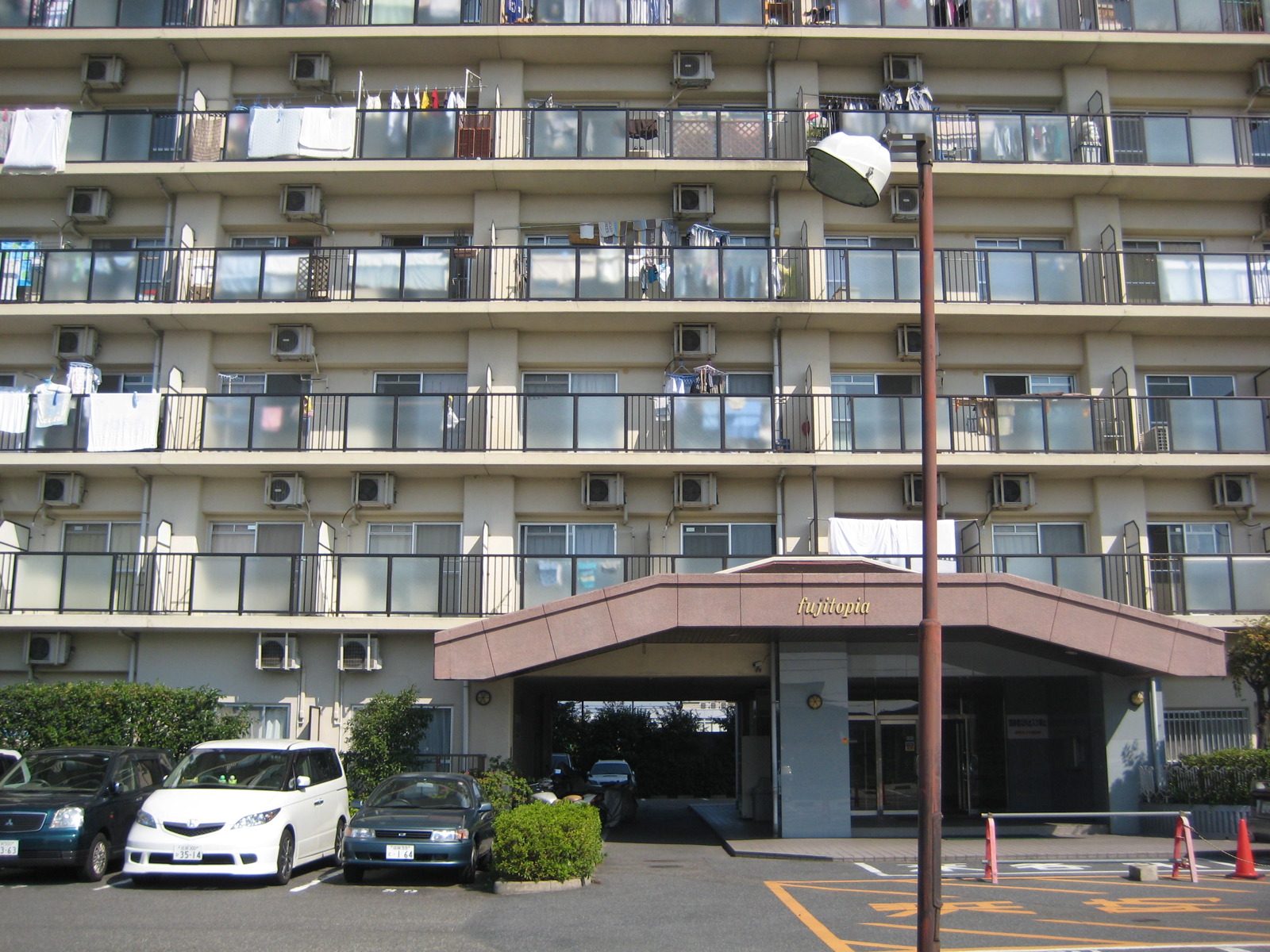
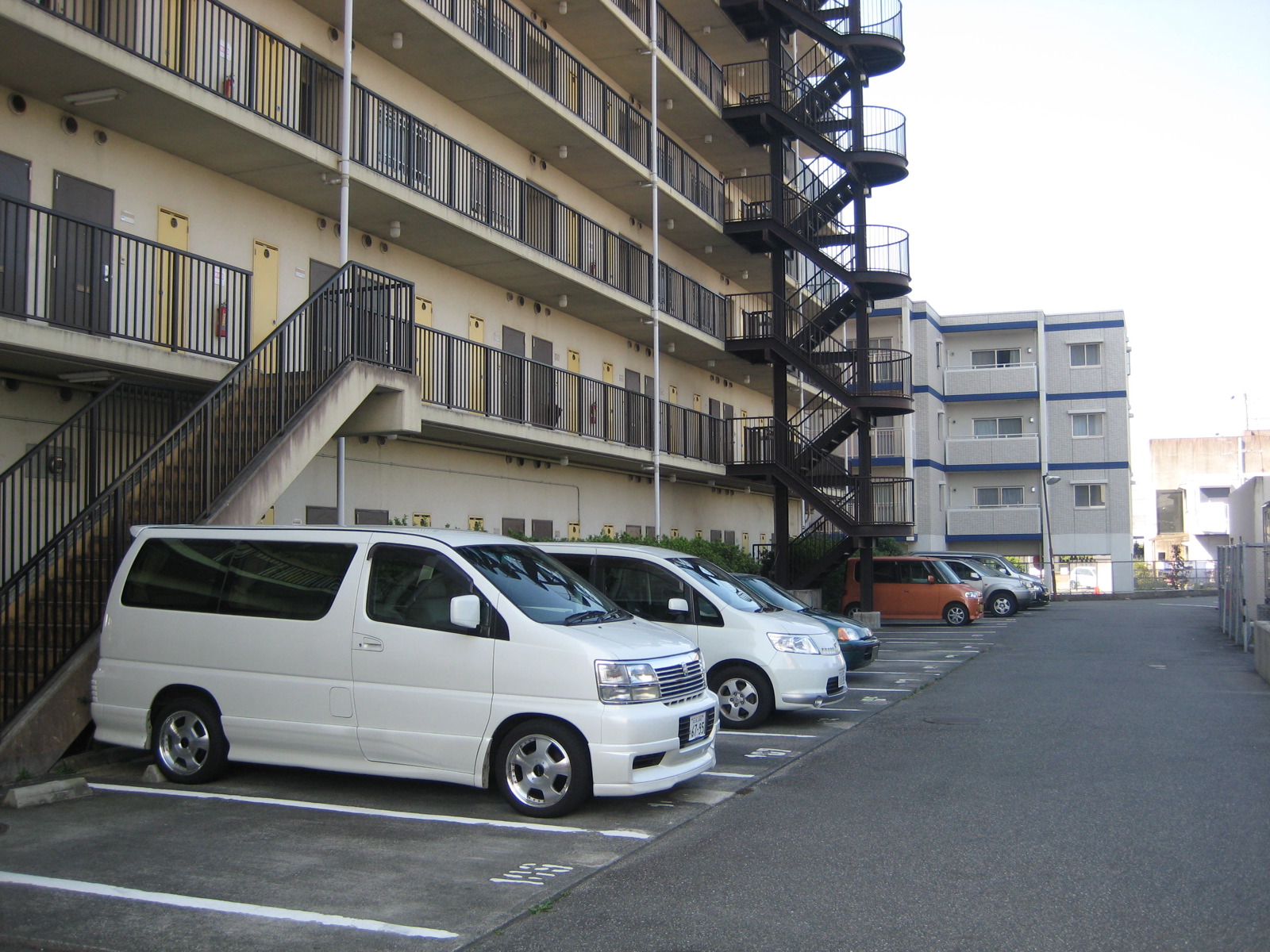




I had taken an inflatable saddle-cover with me from home but since it is a narrow racing-bike saddle, it keeps sliding off. I really need another cover to keep it in place. Erico had explained where the bicycle-shop was, in case of need. As it is still lovely weather and I want to rest my painful limbs, I walk to the town centre.
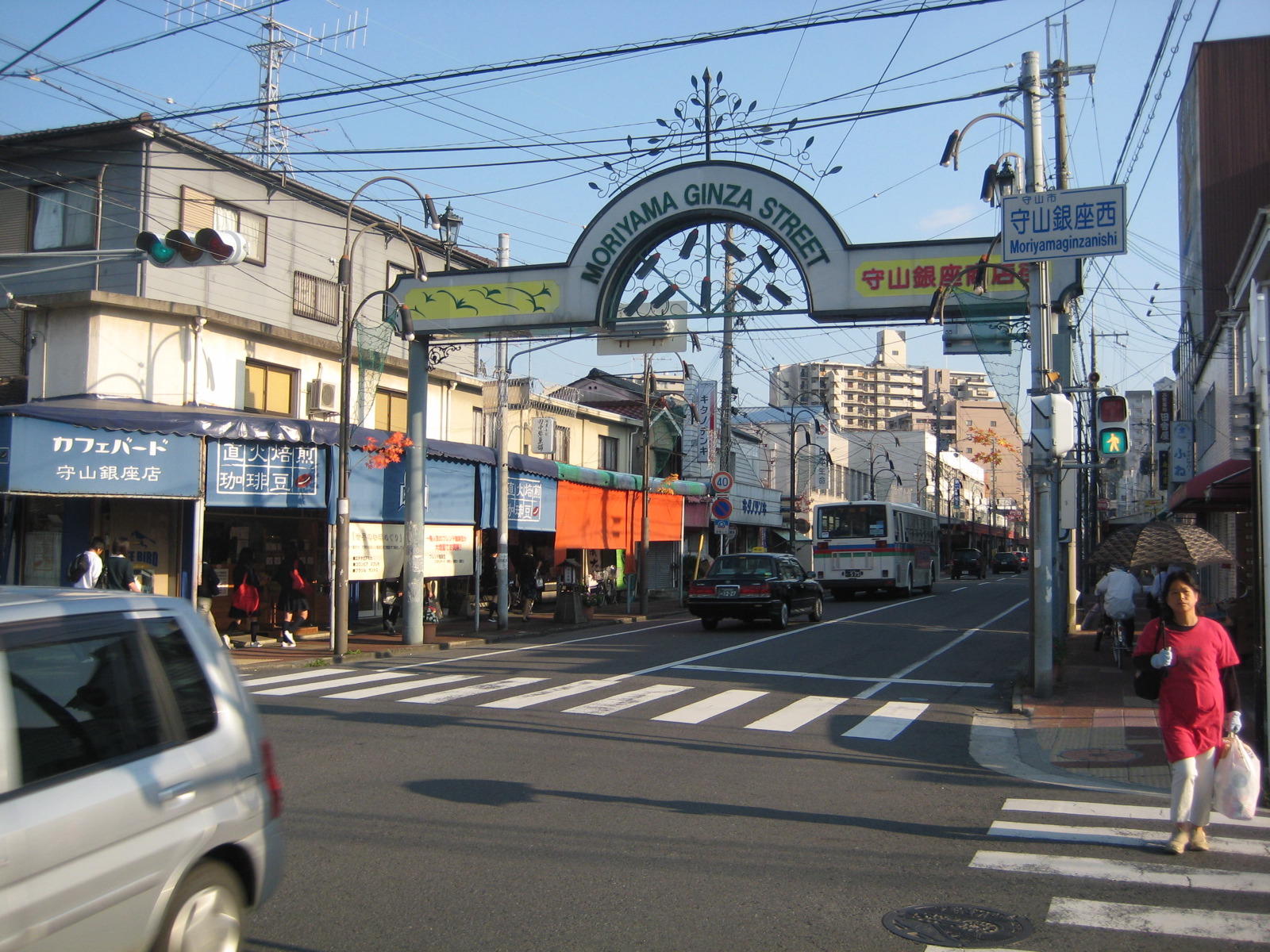
The bicycle-shop has no saddle-covers, or the man doesn’t understand me. I also try the enormous supermarket on the other side of the road, the Seiyu. The supermarkets in Japan are really a mixture of a supermarket, a department store and various cheap shops. And that squared. Something like that.
But even here, no saddle-covers. Never mind, we’ll have to think of something else. I wander through the streets and am astonished about everything I see and hear ...
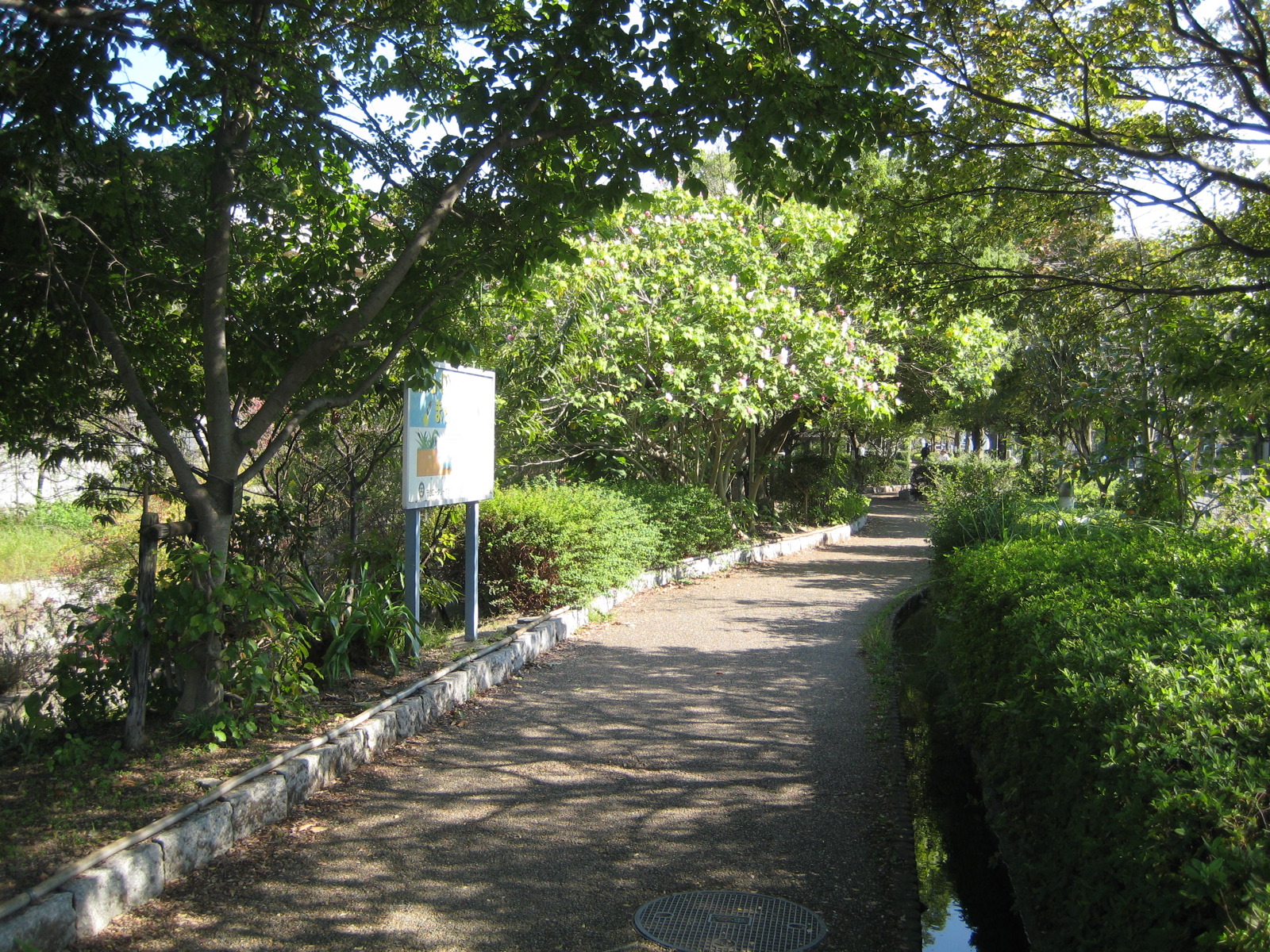
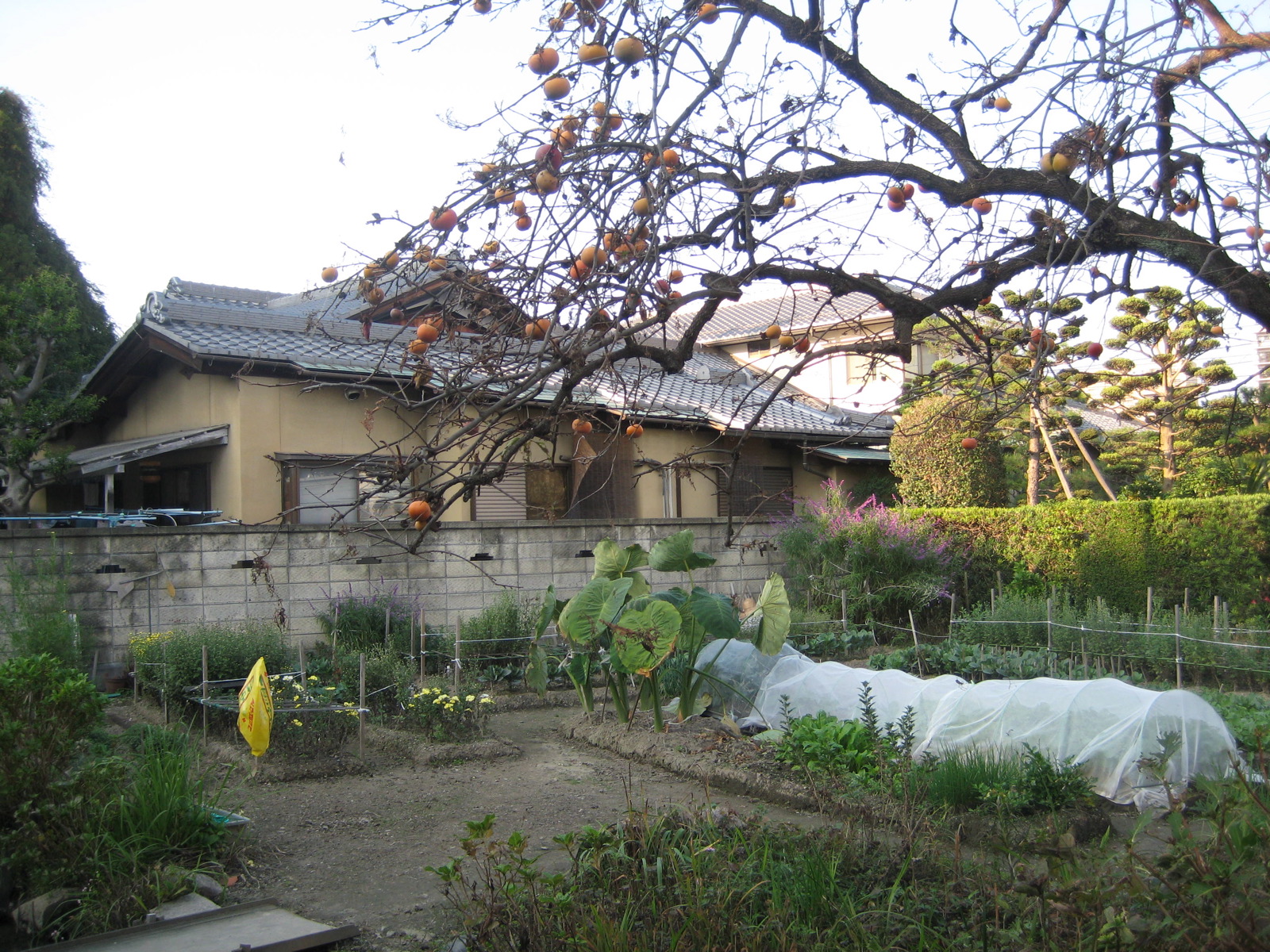
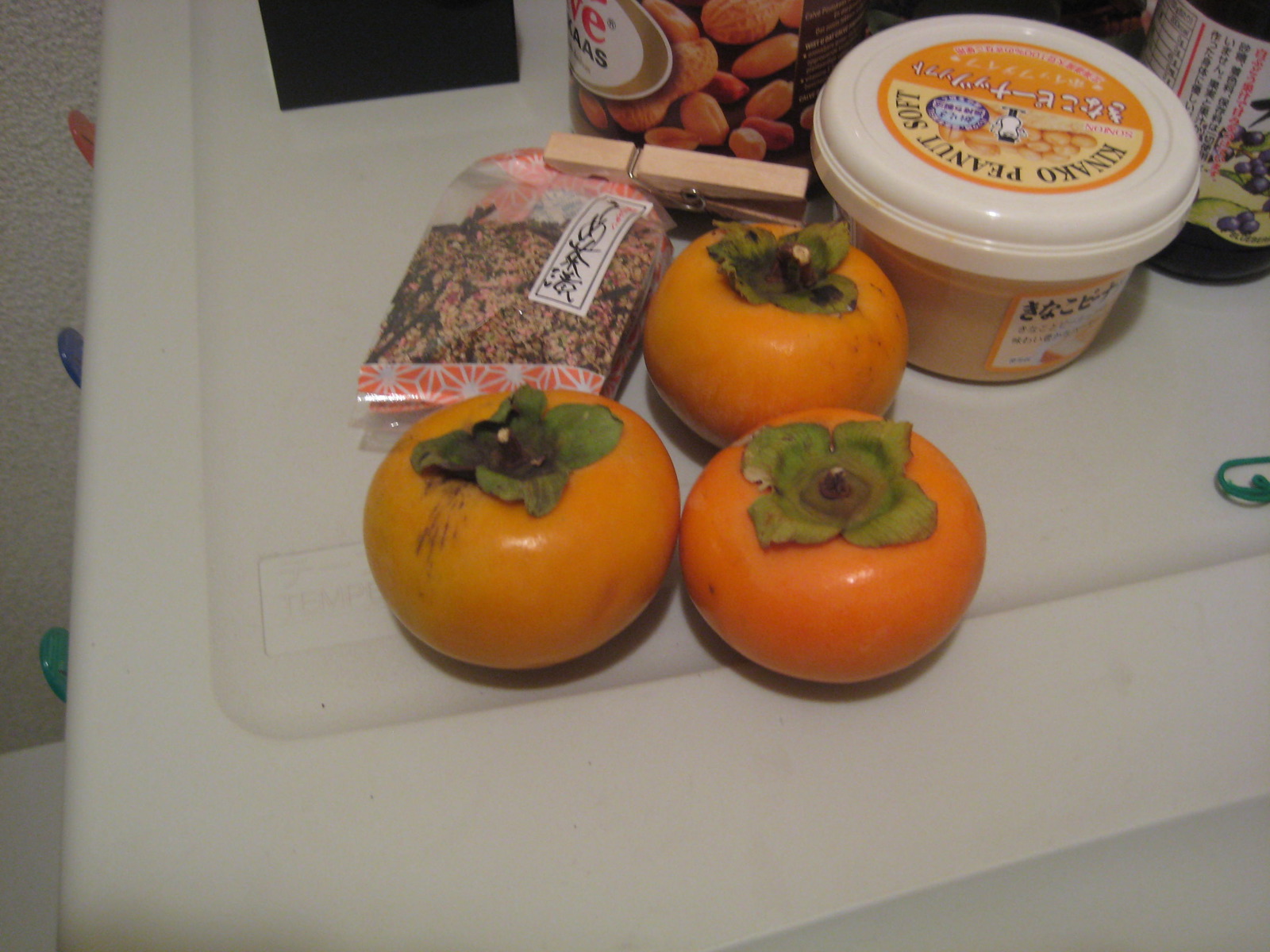
Quite unexpectedly I see a park. I walk along the path next to a narrow canal and come to a kitchen garden. I stand still in front of a tree with round, orange fruit. What could that be? Never seen before.
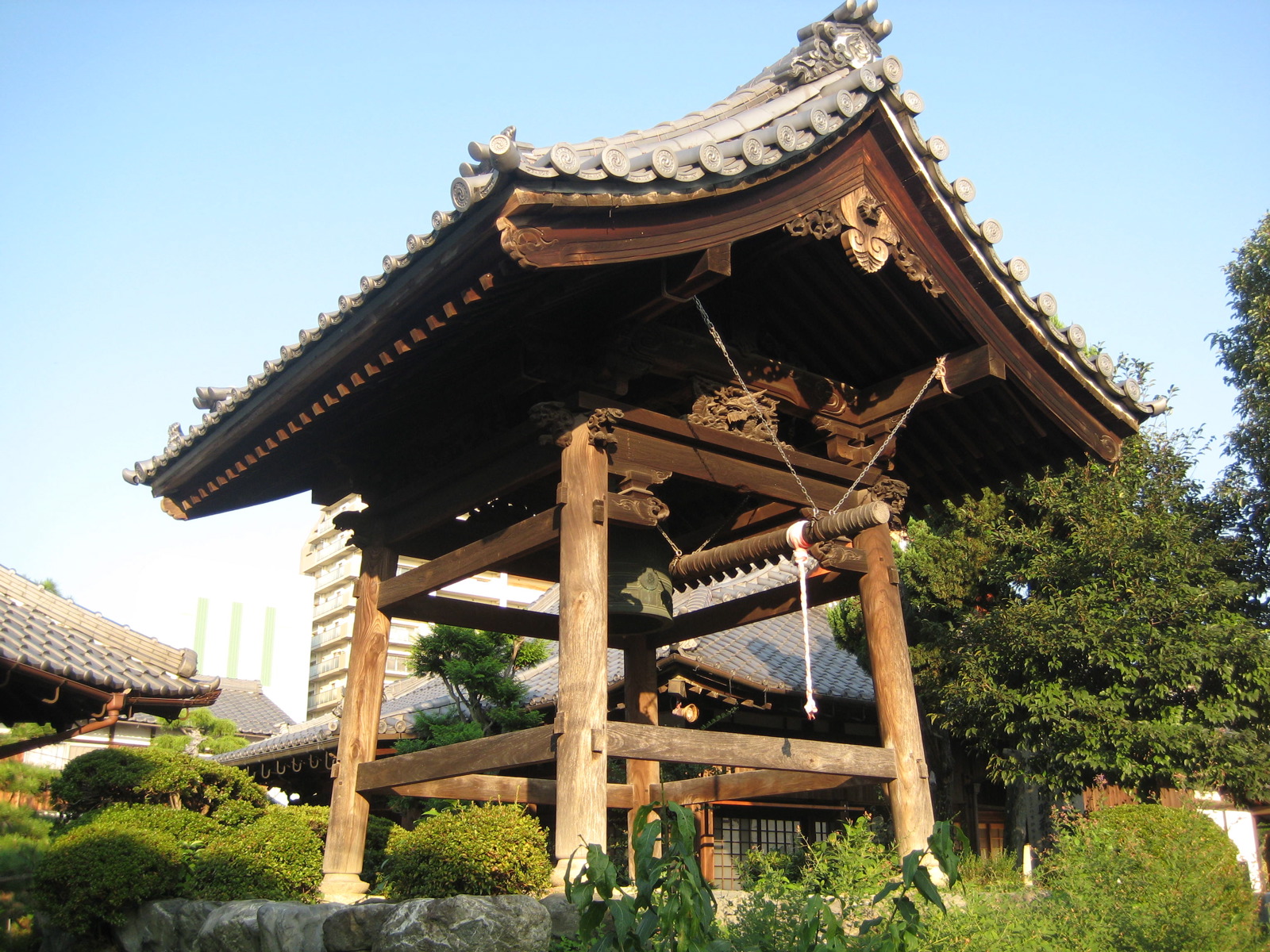
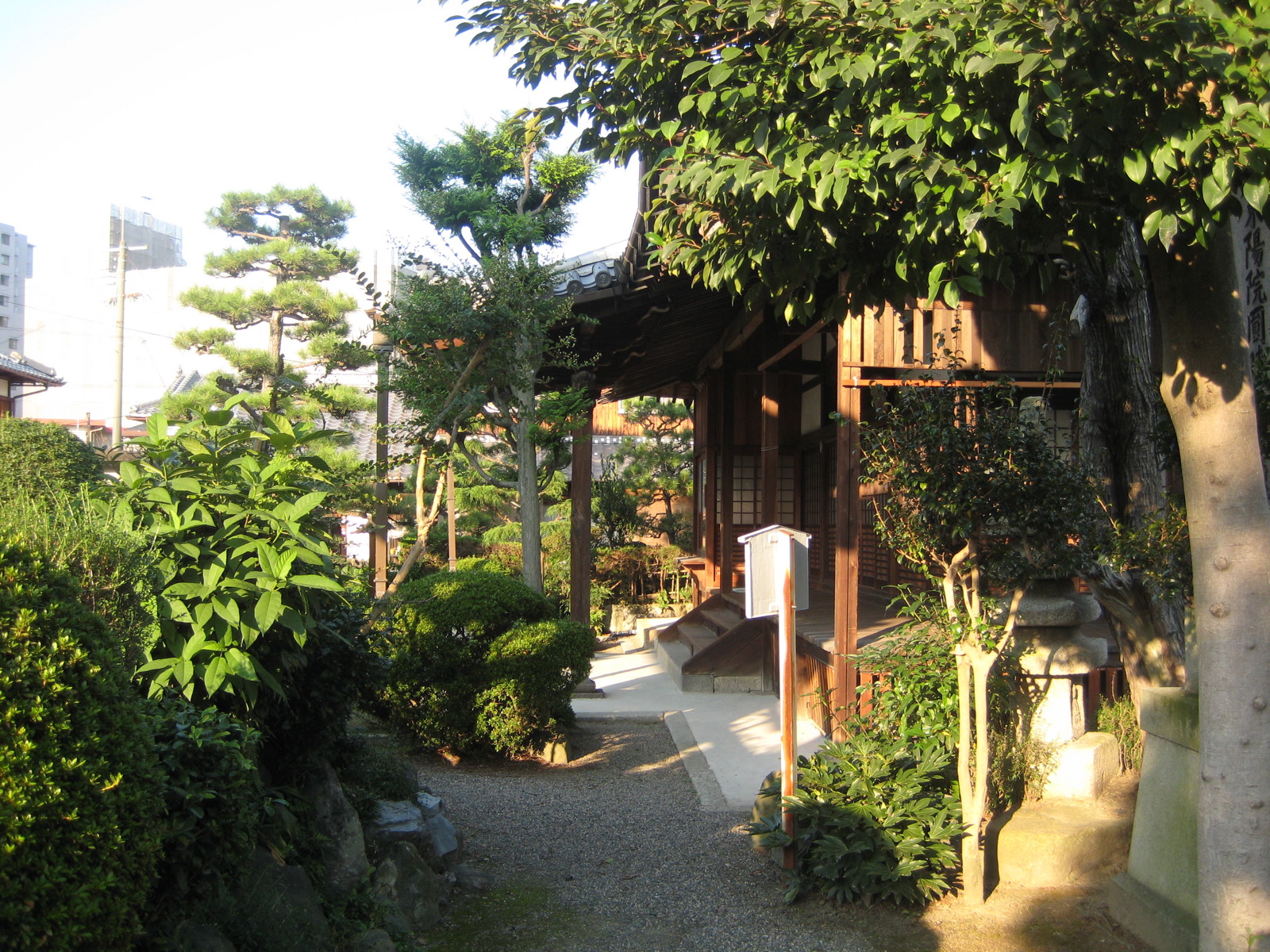
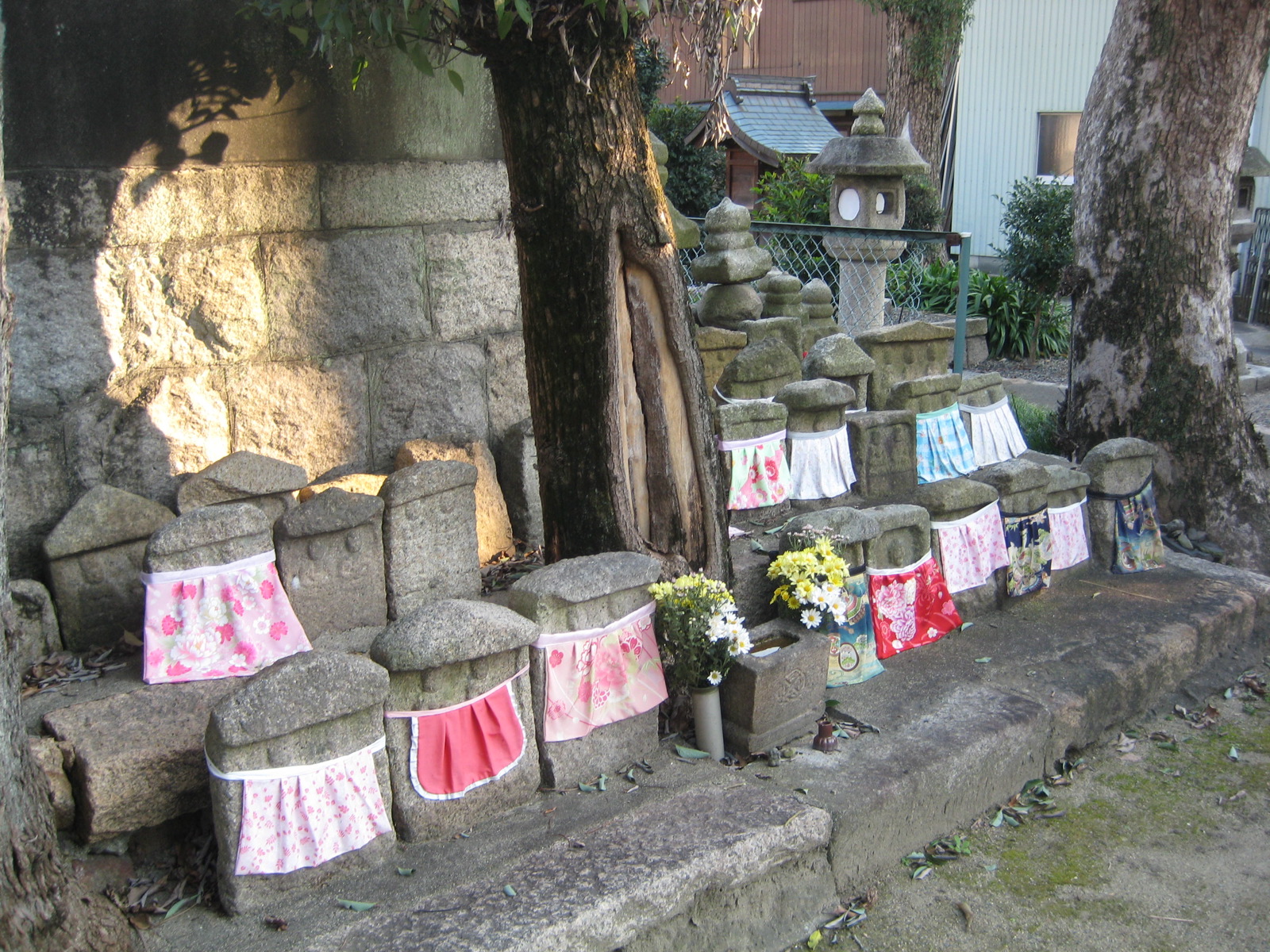
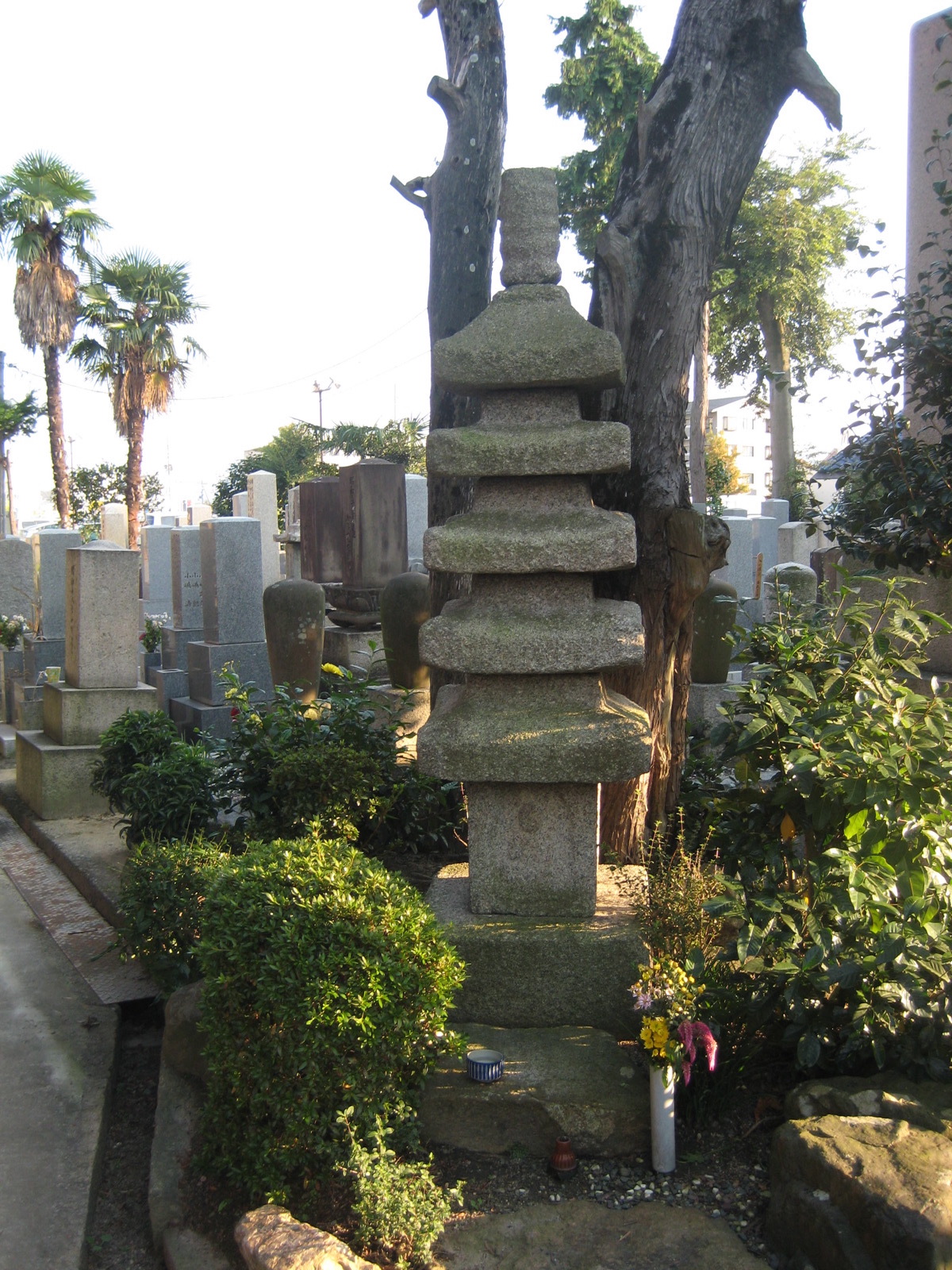
I go on and suddenly see an imposing building that does not fit at all into the style of the rest of the area of grey concrete (the park astonished me already). It turns out to be a Buddhist temple. I am very impressed. Actually, it’s really a temple complex. There is also a cemetery and a large belfry. There are a great many images of Buddha in the cemetery, some of which have bibs. Later I hear these are children’s graves.
A man comes up to me, points to a small pagoda, and starts to tell me a lot of interesting things in Japanese (at least, I imagine that’s what he was doing) about the temple and the adjoining cemetery.
‘Americano?’ he asks.
‘No, Ollando’.
‘Ah ... Orrando’.
We walk past two ladies. He points to me and calls to them: ‘Orrando, Orrando!’ The ladies are very impressed. After thanking the man profusely, I walk on. A little later, I hear ‘Orrando, Orrando ...’ I look round and get five fruits put into my hand. Later, Erico tells me they are Kakis (I didn’t know them but they are better known as Sharon fruit).


Sunday, 19th October, 2008
Distance cycled: ca. 25 km
Weather: sunny and warm, 28˚ C
Today I continue on my voyage of discovery. Yesterday evening, Erico arrived with a saddle cover and carrier straps. Especially the first will hopefully contribute to my sitting-comfort.
I cycle cheerfully through all sorts of little towns that are more or less joined together. First, I come to Ritto although it takes a while before I realise that I have changed towns. But according to the map on the side of the road, I really have left Moriyama and am well into Ritto. I cycle along an extremely busy road, left and right only car dealers with blinking neon lights and screaming loudspeakers. The noise is enough to wake the dead. Regularly I stare at my map, the one copied from the street-atlas, scratch my head, raise my eyebrows and turn it 180˚.
It’s tricky, a map with only Japanese signs. You have to watch out that the signs are the same as those you see on the notices. Then I come to Kusatsu. This change isn’t big either, in fact there is really no change at all: here too it is busy and I only see grey concrete, neon lighting and lots of people. I hear music and (?) important announcements from many loudspeakers. Sometimes a (Buddhist) temple or a (Shinto) shrine appears amongst all that grey and neon. I spare my back a bit by resting a lot and walking some of the way. This is not difficult as there is so much to see.
Meanwhile, I have learnt how to tell the difference between a temple and a shrine. A shrine has one or more entrance gates called torii. Most of these are made of wood and painted orange and black. Temples have no entrance gates.
At one of the shrines, I am accosted from a car by a woman of about 50. “Hallo. Sorry, do you have time? I want to speak English.” Yes, of course, time enough. She gets out of the car and tells me that she lived in America about 30 years ago but never speaks English now. She wants to know the ins and outs of everything, which is unusual in Japan but, after all, she has lived in America.
I get the impression, which will be confirmed during the coming weeks, that the Japanese think it very important to be on the photo themselves. From their point of view it’s logical: think of the hordes of Japanese tourists running from a bus, taking photos and running back to the bus which quickly resumes its route. At home, they can see where they have been from the photos and prove it because they are on the photo.
I have sometimes teased Erico about this but she recognises it too: “It’s because we only have a week’s holiday a year and want to make the most of it”. Goodness, I’d never thought of that.
On this holiday, a tremendous number of photos have been taken of me. As soon as you are seen with a camera, they immediately offer to take a photo of you. As it is very impolite to say ‘no’, I let it happen and then take another photo of the subject without my being in it. So about half my photos are doubled and, as I have no talent for modelling, I soon remove the double ones, with a few exceptions.
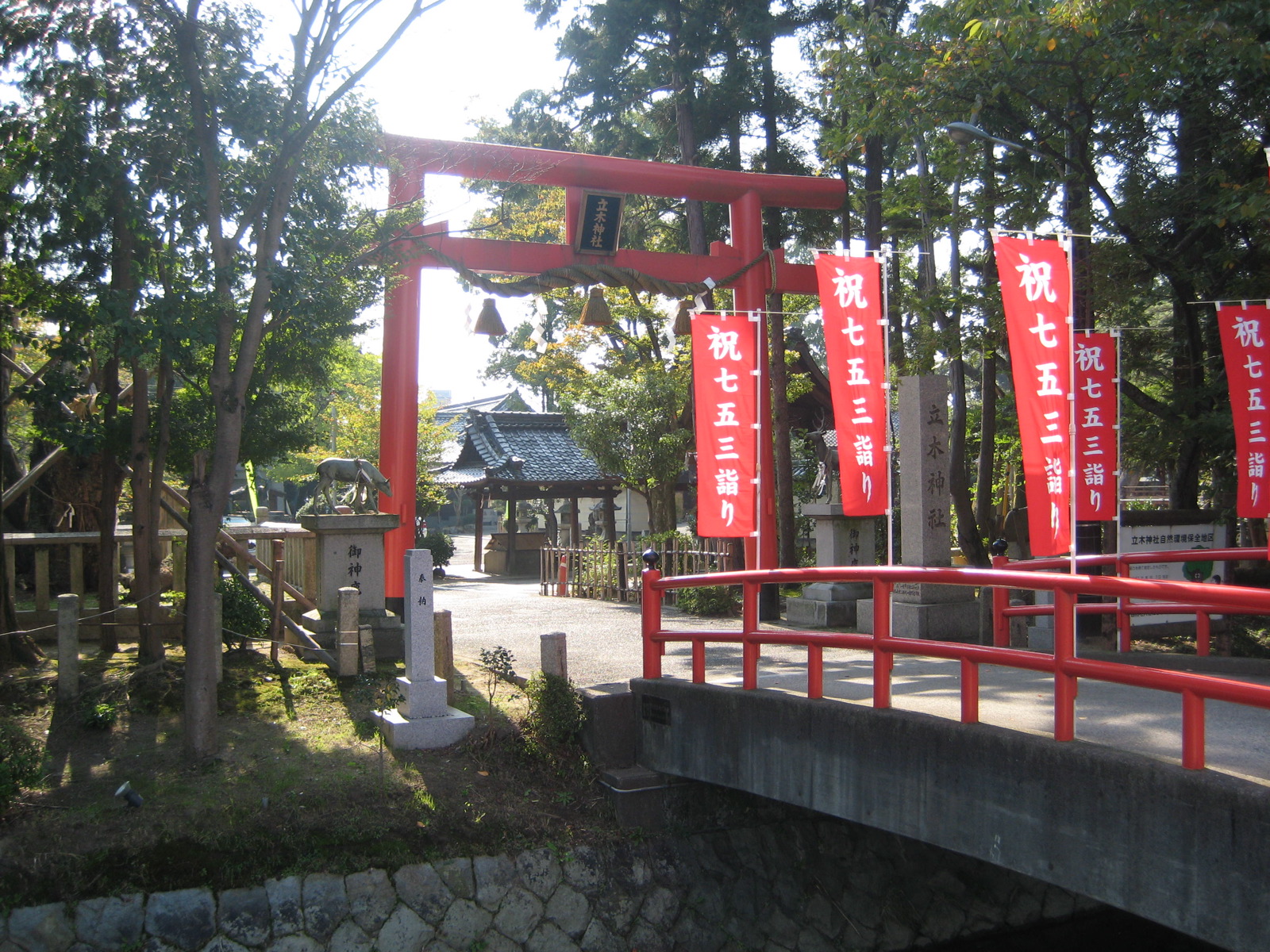
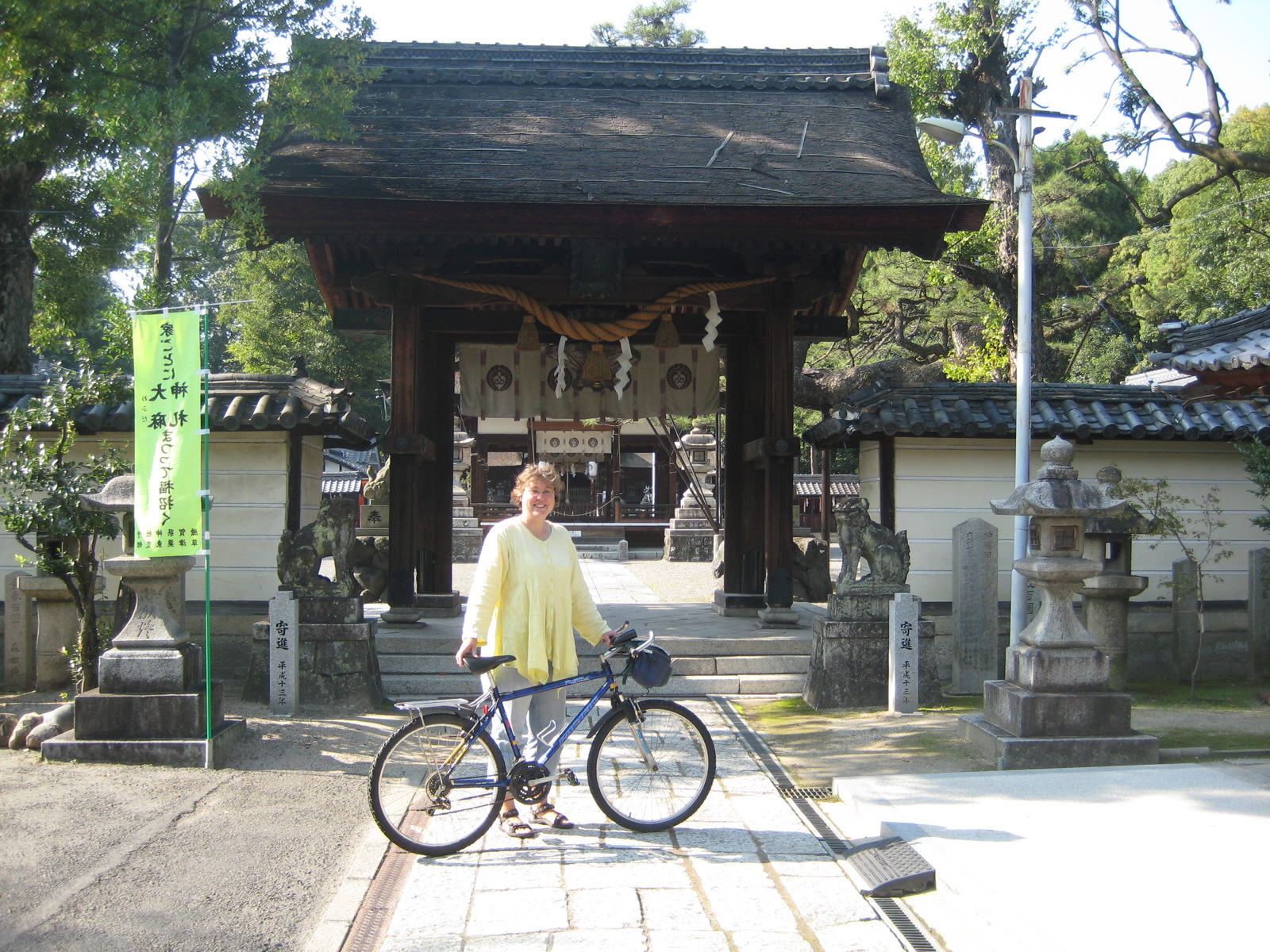
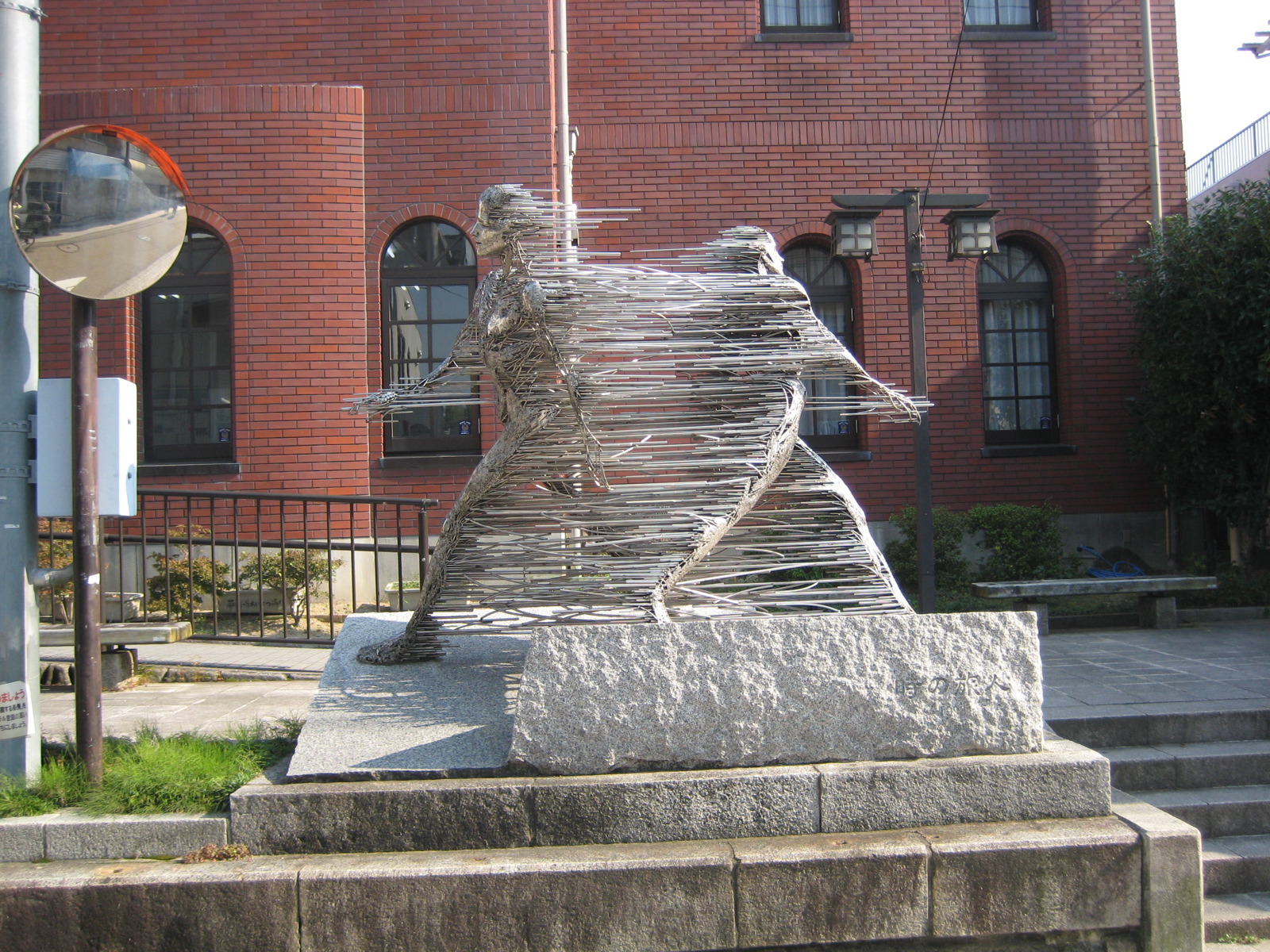

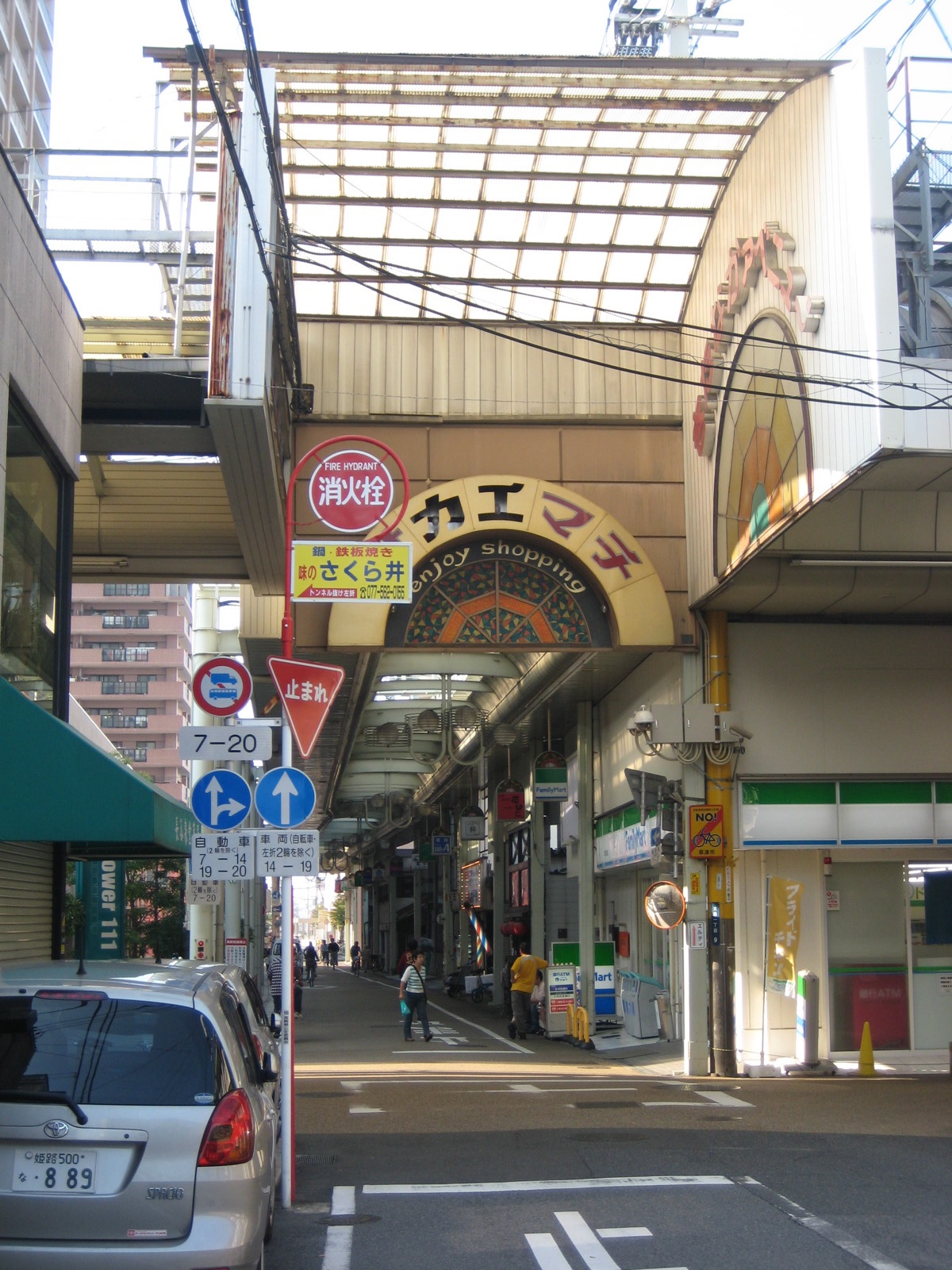


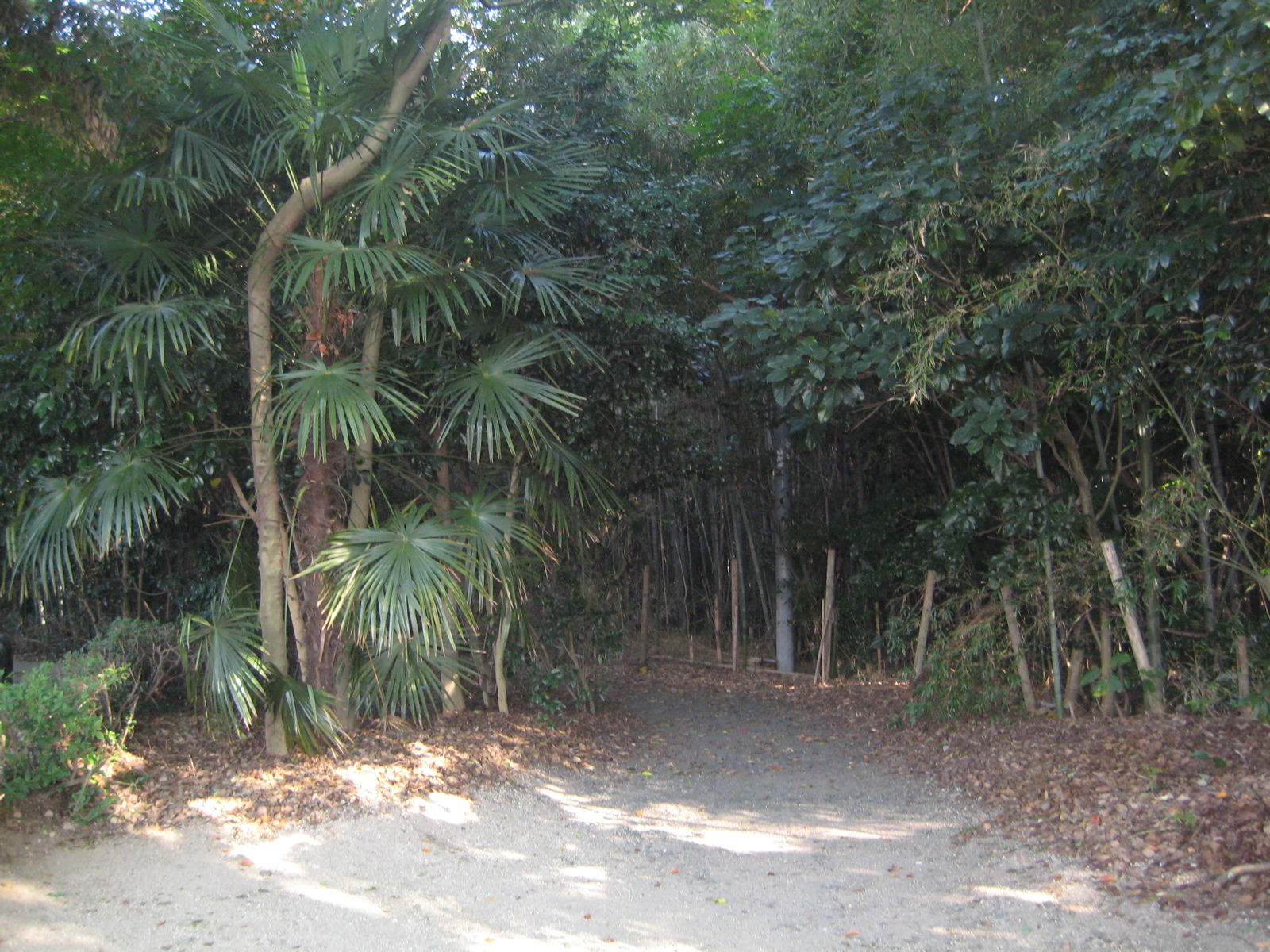
I enter Ritto from the other side. I have meanwhile got used to finding a shrine or a temple in between all that grey concrete and neon lighting, often surrounded by a beautiful park or wood.

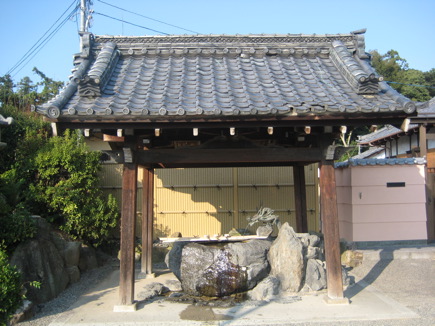
Find the difference
The difference between the photos, and I admit it can hardly be seen, is the spades, (see photo below).
I have just taken the first photo and want to walk on. A man hurries up to me and quickly puts down three spades, precisely next to each other, and motions me to take the photo again. I’m always willing to comply and take another. I understand that the photo above is not suitable for publication but do it all the same.
Again I want to move on but the man motions that I must first wash my hands.

I get home at the end of the afternoon. Luckily, I have a free day tomorrow and can rest my limbs, muscles and joints a bit. The trip round the lake begins the day after tomorrow, but whether I can get home again on this bike ...

