

So that was my cycle-trip in Japan. I must say: it hints of more to come! There is a cycle route right through Japan, from north to south. Who knows, sometime ...
After this trip, I stayed another three weeks in Japan and visited various cities, amongst which Tokyo, Kyoto and Nara. I was also able to use the Japan Rail Pass, with which I could travel free by train. The last five days, I stayed with Chiaki and her parents in Osaka. I would like to tell you about a few special occasions.
It will be obvious by now that Japan is a country of contrasts. During my holiday, this was confirmed many times. The Japanese, too, could also be labelled thus, though ambivalence is perhaps a better word. Or rather: you never know for sure whether yes is yes or no is no, witness the example of miscommunication below.
I was going home from Takamatsu and wanted to make use of the Shinkansen (high-speed train) between Okayama and Kyoto. On arrival in Okayama, I heard alarming sounds coming from the loudspeakers. At least, it sounded alarming to me, as I heard the word ‘shinkansen’ far too often. And from the voice I could hear that there was definitely something wrong (maybe the same intonation as that of announcements in Utrecht Central Station??). Anyway, at the gates for the Shinkansen there were hordes of people. That in itself is not unusual, but now they didn’t move and that was odd. I also saw ‘delayed’ on all the notice boards. Hm ... what now? I asked a railway official how best to get to Kyoto. For a Japanese, he spoke quite good English, but even then, we didn’t seem to understand each other. It went something like this:
‘Sumiemasèn, arrigato tozai mas (excuse me, and thank you for helping me), is there a train to Kyoto?’
‘Not Shinkansen today, terrible accident’
‘What about a local train?’
‘No, not local train’
‘Oh, why not?’
‘Too long, 4 or 5 hours under way, Shinkansen only 1 hour’
‘But that’s not running today?’
‘No, no Shinkansen today.’
‘But can’t I go by a local train?’
‘No, not local train, takes 4 hours. Or 5. Shinkansen only 1 hour’
‘Do you think it will run again today?’
‘No, not Shinkansen today, terrible accident’
'How do I get to Kyoto then?’ (An open question for a change)
‘Not to Kyoto today, no Shinkansen’
‘Not even by local train?’ I try again.
‘Too long journey, Shinkansen only 1 hour’
I give up. This sort of communication techniques is lost on me. I walk towards the gates of the Shinkansen , in the hope that it is all a big mistake and that I can now get into the train and be in Kyoto in an hour. There I can change to the fast train to Moriyama.
I see someone else in a cap and try again. And then, what I was afraid of, happens: a repeat of the previous conversation. When I ask urgently a few times whether there is a fast or local train to Kyoto, he gives me the answer I have been waiting for: ‘hai (yes), local train to Kyoto, change in Aioi’. Ah ... that’s what I wanted to know. Recklessly I ask: ‘At what time will I be in Kyoto then?’ Wrong question. ‘In three or four hours. Maybe much longer, five or six’.
Saying ‘arrigato tozai machita’ (thank you for helping me), I go and look for the local train to Aioi.
This story is just an example, many times have I had such conversations. Sometimes funny, sometimes very frustrating. Incidentally, the journey above went very well. From Aioi, I was able to continue with the Shinkansen after all. A few hours before, someone had jumped in front of the train, so ...
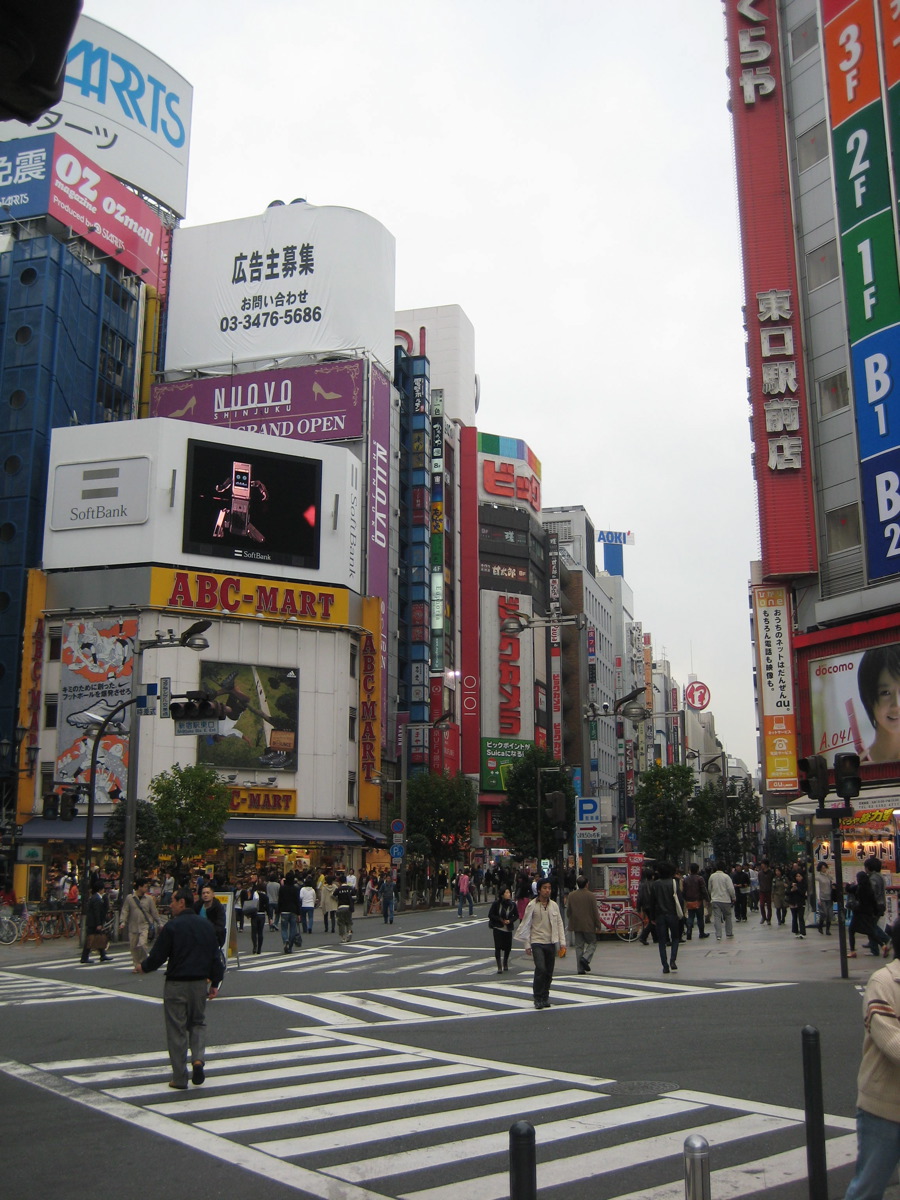


Another thing that amazed me: wherever you are, everything around you is blaring. The amount of colour and neon-lighting in advertisement hoardings and signs was very tiring for my nature-loving eyes. It strikes me as a shrill contrast with the use – or lack – of colour in interiors and clothing. This is very sober. Compensation perhaps?
The Japanese also appear to be afraid of silence. In department stores there’s an infernal noise. In smaller shops, there are various radios, on different stations, and in the larger ones you also hear, besides music from loudspeakers, the sounds of slot machines and announcements from the staff. Outside, everything is noisy too. There are loudspeakers on the corners of streets, (even in the countryside!!) for announcements and sometimes music.
All this is diametrically opposed to the fact that this nation has, for centuries, had an eye for the most sensitive art (e.g. calligraphy), keeps up its centuries-old traditions daily (e.g. wearing a kimono, the tea-ceremony) and worships its beautiful scenery. I don’t understand it but maybe, as a western person, I shouldn’t try to.
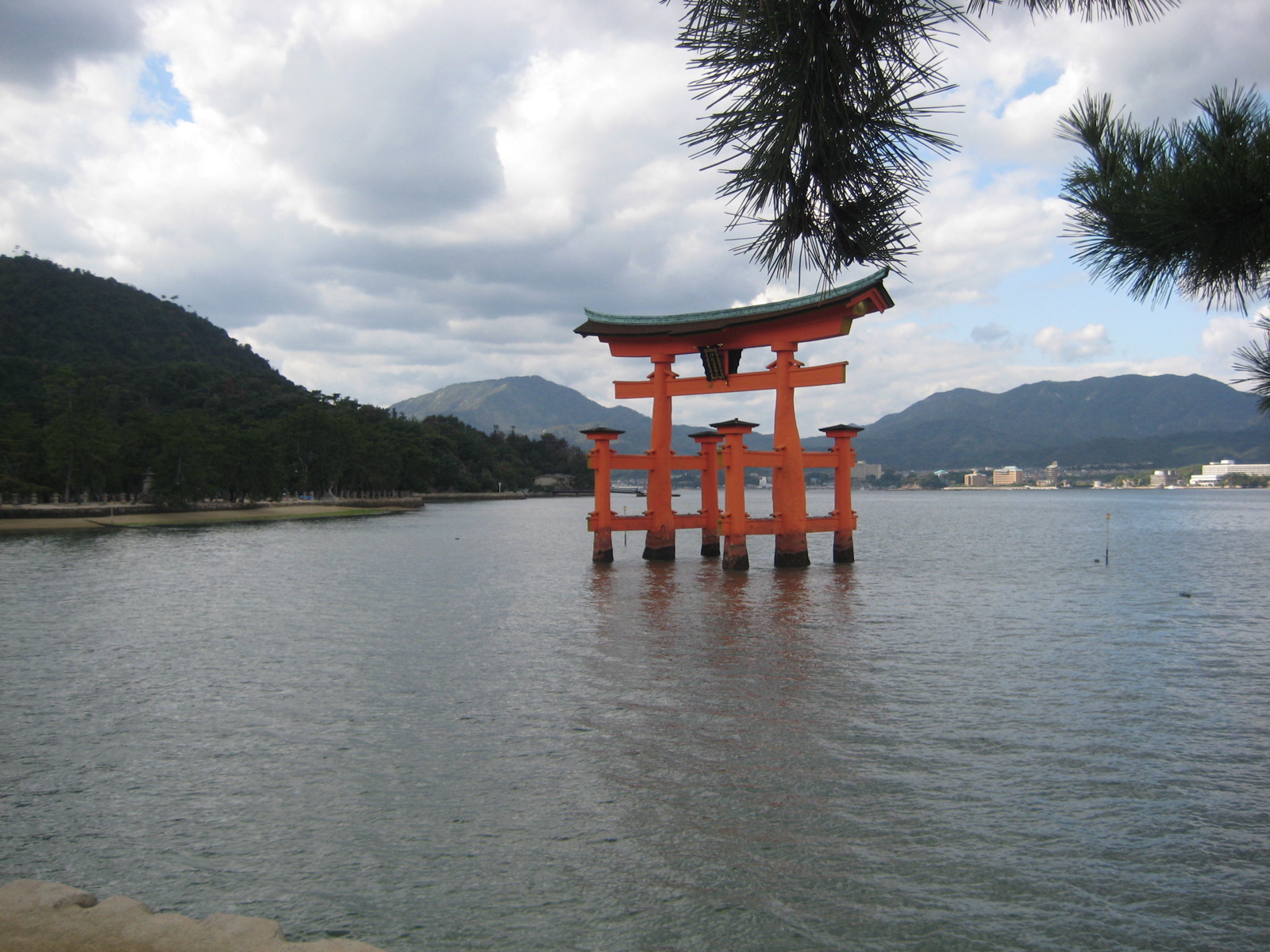
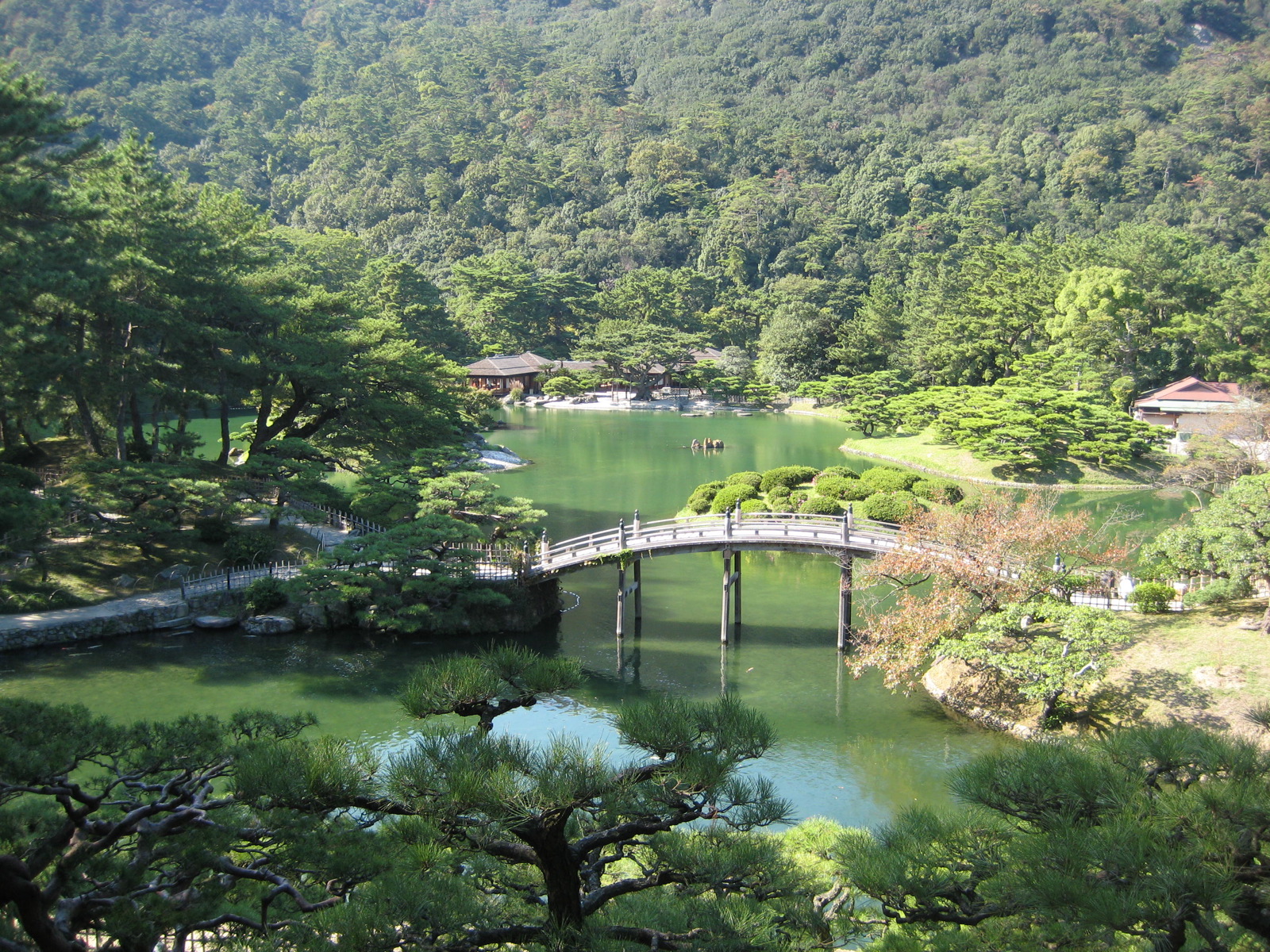
Outside the urban areas, Japan is a really beautiful country! Mountains, woods, parks and the many temples and shrines: such beauty! A little series of photos below.



Japan, sayonara!! (See you later!)

